Why ASTM F1292 Matters to Your Business
Every playground you build carries liability. ASTM F1292 isn't just a compliance checkbox—it's your first line of defense when a parent calls after a fall, when an inspector shows up, or when your client asks why their insurance premiums went up.
The standard defines critical fall height (CFH): the maximum height from which a life-threatening head injury would not be expected. Get the surfacing wrong, and you're not just non-compliant—you're exposed. Your client is exposed. And that phone call from their attorney isn't one you want to take.
Critical Fall Height: The Core Requirement
ASTM F1292 tests playground surfacing materials by dropping an instrumented headform from various heights. The material passes when the peak deceleration stays below 200 g and the Head Injury Criterion (HIC) stays below 1000.
What this means on the job:
- Rubber mulch tested at 6 feet needs at least 6 inches of compressed depth to pass
- Engineered wood fiber (EWF) at 10 feet needs 9 inches minimum
- Shredded rubber tested at 12 feet needs 9 inches
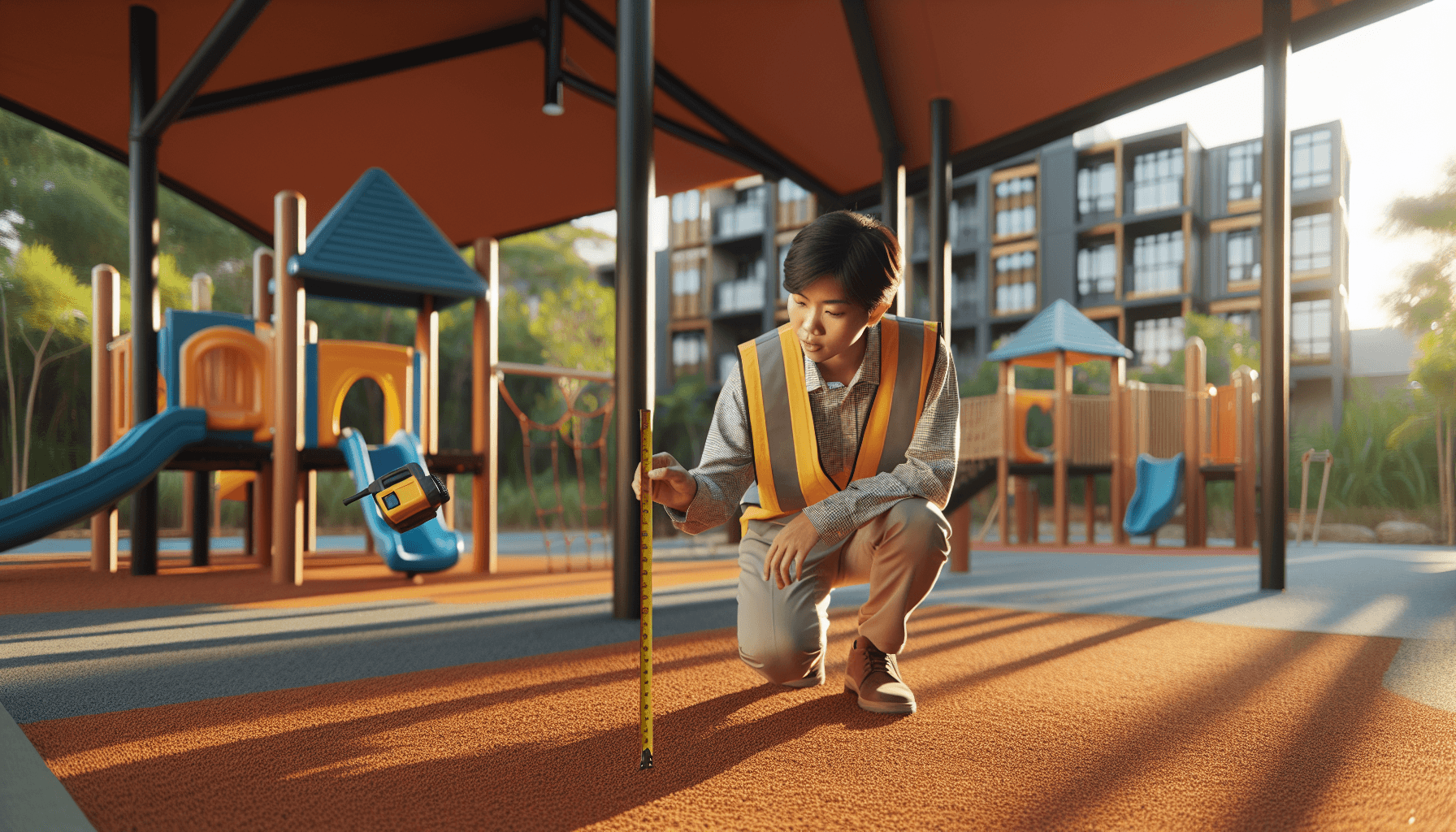
These aren't suggestions. Miss the depth requirement by two inches and the entire surface fails compliance. Your crew can't eyeball this—you need a measuring stick and you need to check it across the fall zone, not just at the edges.
Fall Zones and Use Zones: Where Compliance Applies
ASTM F1292 doesn't require surfacing under the entire playground. It requires impact-attenuating surface within the use zone—the area where a child could reasonably fall.
Use zone dimensions (per ASTM F1487):
- Swings: 2x the height of the pivot point in front and back
- Slides: 6 feet from the slide exit plus the height of the platform
- Climbers: 6 feet in all directions from the perimeter
Miss a corner of the use zone and you've failed inspection. Plan your surfacing install around equipment specs, not guesswork.
Common Compliance Failures We See
1. Insufficient depth at installation
Contractors order enough material but compress it too much during install. EWF settles 20-30% after installation. If you install 9 inches and it compresses to 7, you're non-compliant from day one.
2. No maintenance plan
Surfacing depth erodes over time. Rain washes away fines. Kids kick mulch out of high-traffic zones. We see 2-3 inch depth loss within the first year on heavy-use playgrounds. ASTM F1292 compliance isn't one-and-done—your client needs annual depth checks and top-offs.
3. Wrong material for the fall height
Not all surfacing materials are tested to the same heights. Pea gravel maxes out around 7 feet. Sand around 9 feet. If you're installing under a 12-foot deck and spec sand, you're building a liability.
Material-Specific Compliance Notes
Engineered Wood Fiber (EWF)
- Requires 9 inches minimum for most playground heights (8-10 feet)
- Compaction is your enemy—don't drive equipment over it
- Decomposes faster in wet climates; plan for annual top-offs
Rubber Mulch
- Tested to 10-12 feet with 6-9 inches depth
- Doesn't decompose but can displace under swings
- Heavier than EWF; easier to maintain consistent depth
Poured-in-Place Rubber
- Most expensive but most durable
- Install thickness must match the tested thickness exactly
- Seams are the weak point—requires certified installers
Installation Best Practices
Before you pour:
- Verify equipment fall heights with the manufacturer
- Calculate use zones and mark them on-site
- Confirm your surfacing material is ASTM F1292 tested to the required height
During install:
- Measure depth at multiple points (minimum 9 locations per use zone)
- Account for settling—add 20-30% extra depth for loose-fill materials
- Document everything: depth measurements, material receipts, install photos
After install:
- Provide the owner with an ASTM F1292 compliance certificate from your supplier
- Include maintenance instructions (depth checks, top-off schedule)
- Recommend annual third-party inspections
How GetMulch Helps You Stay Compliant
Every load of playground surfacing we deliver includes ASTM F1292 test certification. You're not guessing whether the material passes—you know before it hits the ground.
Our provider network stocks tested materials across the country. Need EWF certified to 10 feet in Pennsylvania? Rubber mulch tested to 12 feet in Texas? It shows up when your crew does, with the paperwork that keeps your client's insurance happy.
Ready to spec your next playground surfacing project? Visit GetMulch.com to get quotes from certified providers in your area—delivered on your schedule, with compliance documentation included.