Introduction
When it comes to playground safety, proper mulch depth in fall zones isn't a suggestion—it's a critical compliance requirement that can mean the difference between a minor scrape and a serious injury. For playground builders, understanding ASTM F1292 standards and how to calculate the right mulch depth for each piece of equipment is fundamental to protecting children and meeting safety regulations.
Understanding Critical Fall Height
Critical fall height (CFH) is the maximum height from which a child can fall onto a surface before the impact exceeds safe limits. ASTM F1292 defines this through G-max testing, which measures the deceleration forces during impact. A G-max reading above 200 indicates a surface that's too hard and poses serious injury risk.
Every piece of playground equipment has a designated use zone and fall zone based on its height and design. Swings generate the largest fall zones due to their arc of motion, while stationary climbing structures have more contained impact areas. Your mulch depth must account for the highest point a child can reach on each structure.
ASTM F1292 Mulch Depth Requirements
ASTM F1292 provides tested mulch depth requirements based on critical fall height:
- Up to 4 feet CFH: 6 inches of loose-fill mulch
- Up to 5 feet CFH: 9 inches of loose-fill mulch
- Up to 6 feet CFH: 9 inches of loose-fill mulch
- Up to 7 feet CFH: 9 inches of loose-fill mulch
- Up to 10 feet CFH: 12 inches of loose-fill mulch
These requirements apply to engineered wood fiber (EWF) and other ASTM F1292-tested loose-fill materials. Rubber mulch has different depth requirements due to its higher impact attenuation properties—typically requiring less depth for the same CFH.
Account for Compaction and Displacement
Here's what many installers miss: the depth you install is NOT the depth that remains effective long-term. Loose-fill mulch compacts over time due to:
- Foot traffic and active play
- Weather cycles (rain compaction, freeze-thaw)
- Natural settling and decomposition (for organic mulches)
Best practice: Install 20-30% more depth than the minimum requirement. For a 9-inch requirement, install 11-12 inches initially. This compensates for inevitable compaction and extends the maintenance interval before topping off is needed.
Use Zones vs. Fall Zones
ASTM F1487 defines two types of protective surfacing areas:
Use Zone: The area beneath and around equipment where a child is expected to circulate while using the structure. Minimum 6 feet in all directions from stationary equipment.
Fall Zone: The impact area where a child could land after falling or exiting equipment. This extends beyond the use zone for equipment with moving parts:
- Swings: Fall zone extends forward and backward by 2× the pivot height
- Slides: Fall zone extends from the exit based on slide height
- Overhead equipment: Fall zone is typically the use zone plus height-based extensions
Your mulch depth specification must meet the CFH requirements for the tallest designated play surface in each zone. Don't average heights—use the maximum fall height for the entire zone.
Practical Installation Guidance
When your crew arrives to install mulch, follow these steps for compliant depth:
- Measure equipment heights — Document the highest designated play surface for each structure
- Calculate required depth — Reference ASTM F1292 tables for your mulch material type
- Add compaction factor — Increase depth by 20-30% for initial installation
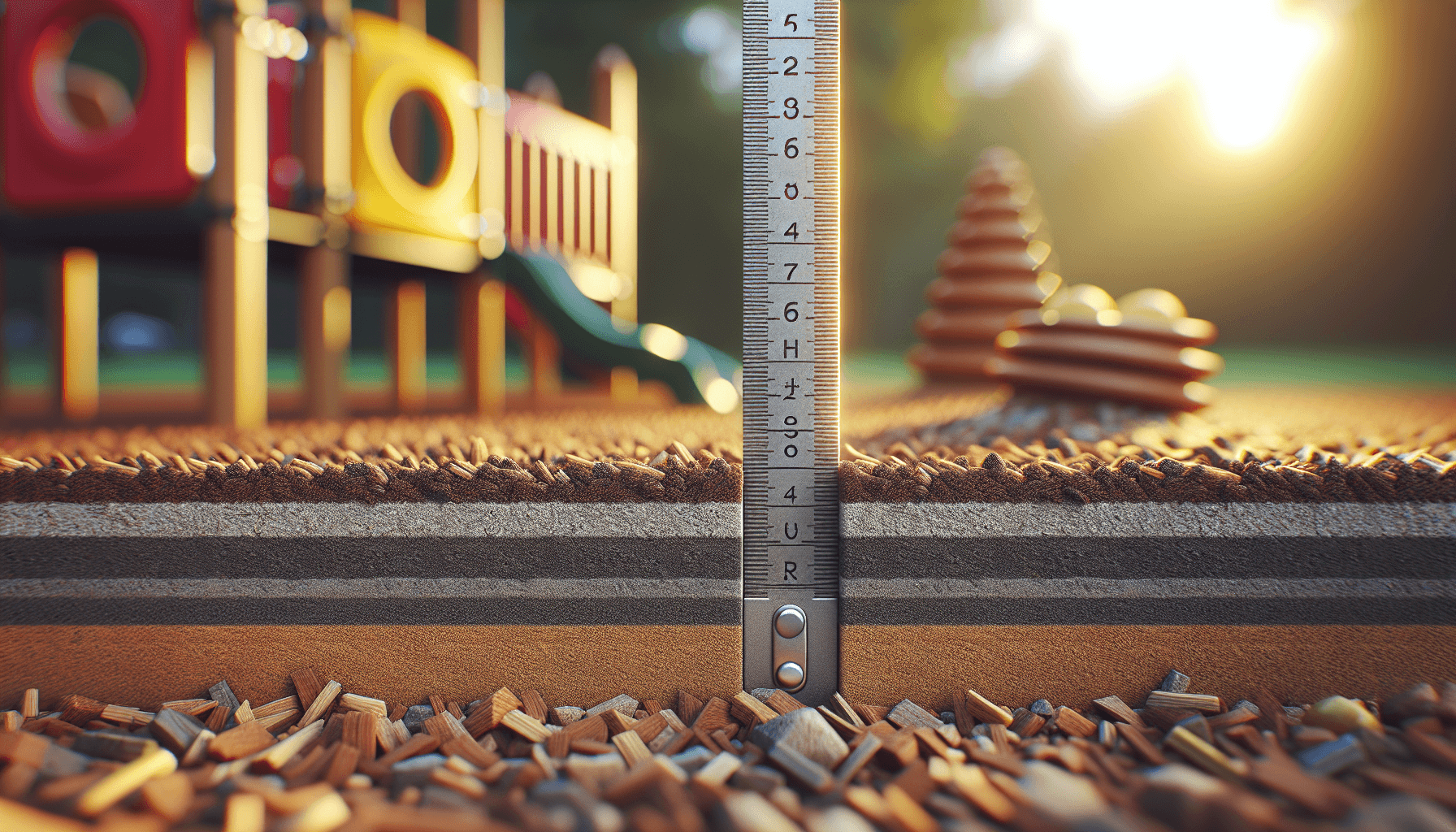
- Use depth gauges — Install permanent markers or stakes at the required compressed depth so maintenance teams know when to top off
- Document coverage — Take photos showing depth measurements in each fall zone for your compliance records
For large installations, consider a mulch blower truck. It delivers consistent depth faster than wheelbarrows and reduces crew fatigue, especially for sites with 12+ inches of required depth.
Maintenance Planning
Mulch depth isn't a one-time job. Build ongoing maintenance into your customer's site management plan:
- Monthly visual checks — Look for displacement, thin spots, and exposed ground
- Quarterly depth measurements — Use a ruler or depth gauge in high-traffic fall zones (swing landings, slide exits)
- Annual top-off — Plan for adding 2-4 inches of fresh mulch to restore compacted areas
- Bi-annual testing — For high-use public playgrounds, consider G-max impact testing to verify surfacing still meets ASTM standards
Proper depth today plus proactive maintenance means your playground stays compliant, safe, and ready for inspections year-round.
Get Your Mulch Depth Right the First Time
GetMulch.com delivers certified playground mulch with complete ASTM F1292 documentation so you can install with confidence. Whether you need engineered wood fiber or rubber mulch, we provide the specs, the material, and the delivery timing that keeps your crew on schedule.
Ready to order? Visit GetMulch.com or contact our team to discuss your next playground project.