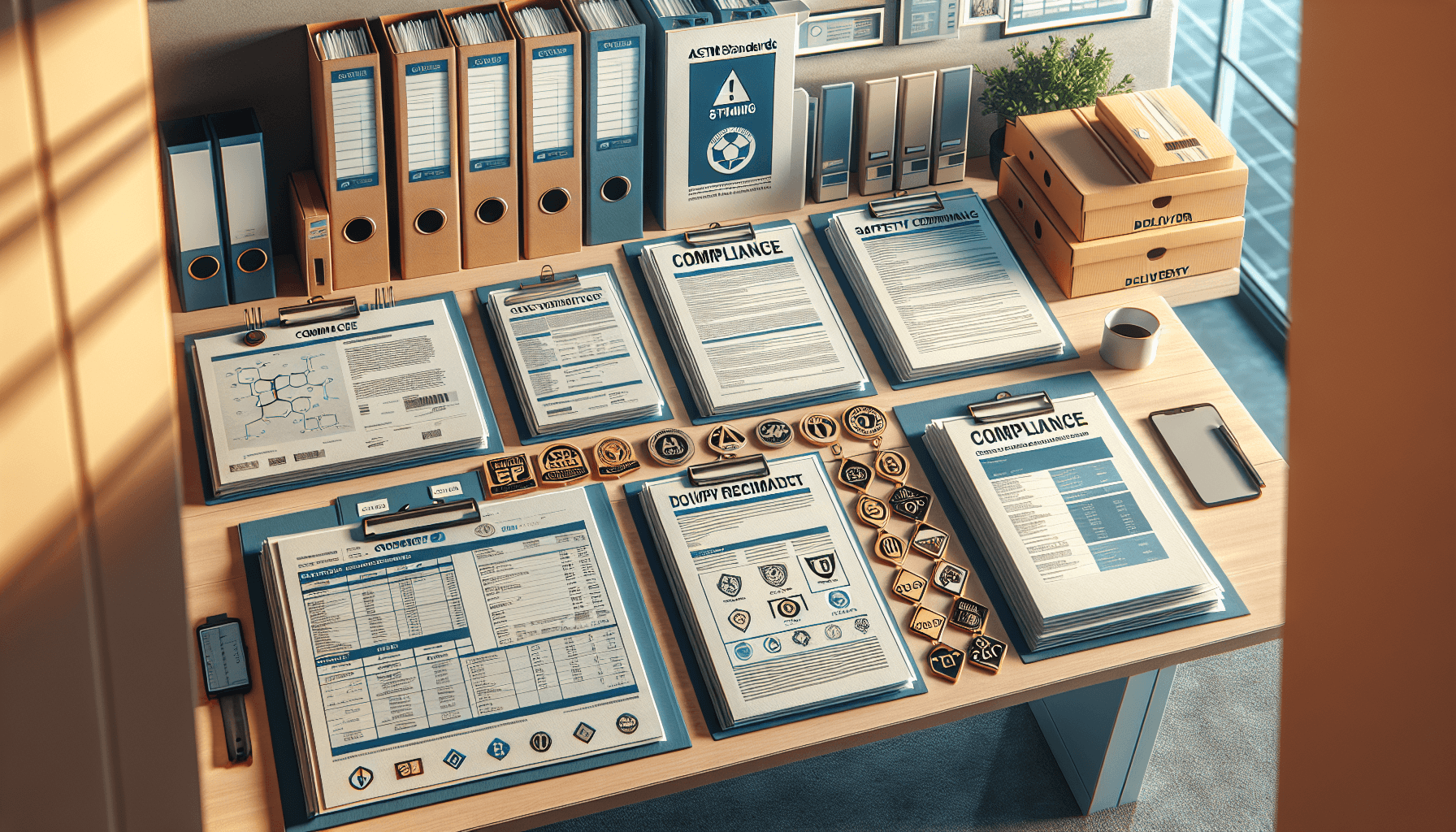
How Proper Documentation Protects Your Company From Liability
For Risk Managers and Decision-Makers in the Playground Industry
When a playground injury happens, the first question isn't "Was the equipment safe?" — it's "Can you prove it was safe?"
That's the difference between a defensible position and a costly settlement. And it all comes down to documentation.
The Real Cost of Missing Documentation
Most playground companies focus on meeting safety standards at installation. That's the easy part. The hard part is proving you met those standards two years later when a claim lands on your desk.
Without documentation:
- You can't verify compliance at the time of installation
- You can't demonstrate material specifications matched the project requirements
- You can't show a clear chain of custody from manufacturer to site
- You're stuck relying on memory, incomplete records, and assumptions
Legal teams don't work with assumptions. They work with paper trails.
What Proper Documentation Actually Covers
Comprehensive documentation isn't just invoices and delivery receipts. It's a complete record that answers every question a risk manager, insurance adjuster, or attorney might ask:
1. Material Specifications
- Type and grade of safety surfacing material
- ASTM compliance certifications from the manufacturer
- Fall height ratings and depth requirements for the specific installation
- Material test results showing compliance with ASTM F1292 and F2075
2. Delivery Records
- Date and time of delivery (critical for warranty and liability windows)
- Quantity delivered and installed depth achieved
- Site conditions at time of installation
- Weather conditions (affects proper installation and material performance)
- Photos or visual verification of the installation
3. Chain of Custody
- Manufacturer certification that materials meet required standards
- Distributor records showing proper storage and handling
- Delivery confirmation with installer sign-off
- Post-installation inspection reports
4. Compliance Documentation
- IPEMA certification for certified products
- ASTM F1292 compliance verification
- State or local regulatory compliance (where applicable)
- ADA accessibility compliance (when required)
This isn't paperwork for the sake of paperwork. This is evidence that protects your company when questions arise.
The Documentation Gap Most Companies Don't See
Here's the problem: most playground builders assume their suppliers provide this level of documentation automatically. They don't.
Standard supplier relationships typically provide:
- An invoice showing what you paid
- Maybe a delivery ticket showing what arrived
- If you're lucky, a basic material spec sheet
What they don't provide:
- Compliance certifications tied to the specific batch or delivery
- Fall height verification for the installed depth
- Photographic evidence of proper installation
- Records that connect the material delivered to the manufacturer's test results
That gap is a liability risk. And most companies don't realize it exists until they need to defend a claim.
How Documentation Protects You (Real Scenarios)
Scenario 1: The Fall Injury Claim
A child is injured on a playground two years after installation. The family's attorney claims the safety surfacing was insufficient.
Without documentation: You're scrambling to reconstruct what material was used, who installed it, and whether it met standards at the time. Good luck.
With documentation: You produce the original material specifications, the delivery record showing installed depth, the ASTM compliance certification, and photos from installation day. The claim doesn't go anywhere.
Scenario 2: The Insurance Audit
Your insurance carrier is conducting a risk audit of your playground installations. They want proof that your projects meet ASTM standards.
Without documentation: You provide general information about your installation practices and hope they accept it.
With documentation: You hand them a complete compliance file for every project. Your premiums stay stable (or drop). Theirs go up.
Scenario 3: The Contract Dispute
A client claims the material delivered didn't match the specifications in the contract. They're refusing final payment and threatening legal action.
Without documentation: It's your word against theirs. Expensive and time-consuming.
With documentation: You show them the delivery record, material spec sheet, and certification from the manufacturer. The dispute ends before it starts.
What a Documentation-First Partnership Looks Like
The best way to eliminate documentation risk is to work with suppliers who build documentation into their process — not as an afterthought, but as a standard part of every delivery.
That means:
- Compliance certifications provided automatically with every order
- Delivery records that capture site conditions and installed depth
- Material specifications tied directly to manufacturer test results
- Digital access to all documentation for easy retrieval when needed
This isn't about finding a supplier who can provide documentation when you ask for it. This is about working with a supplier who makes documentation impossible to lose.
The Compliance Checklist Every Risk Manager Should Use
Before approving any playground safety surfacing supplier, verify they provide:
✅ ASTM F1292 compliance certification for the specific material type ✅ IPEMA certification (where applicable) ✅ Delivery records with date, time, quantity, and site conditions ✅ Material specification sheets tied to the actual batch delivered ✅ Photographic evidence of installation (depth verification, site conditions) ✅ Chain of custody documentation from manufacturer to site ✅ Digital records access so you can retrieve documentation years later
If your current supplier doesn't check all these boxes, you have a gap. And that gap is a liability risk your insurance carrier will eventually notice.
Why GetMulch Exists
We built GetMulch because documentation shouldn't be a fight. Every playground builder deserves a supply chain where compliance records, delivery verification, and material specifications are automatic — not something you have to request, chase down, or piece together after the fact.
GetMulch provides full compliance documentation with every delivery. Not just invoices. Not just receipts. Complete records that answer every question a risk manager needs to answer.
Because when the question is "Can you prove it was safe?" — the answer should always be yes.
About the Author: GetMulch is a documentation-first supplier network serving playground builders across the United States. We connect builders with certified suppliers and provide complete compliance documentation for every project.
Keywords: liability protection, playground safety documentation, ASTM compliance, risk management, safety surfacing records, compliance certifications, playground builder insurance