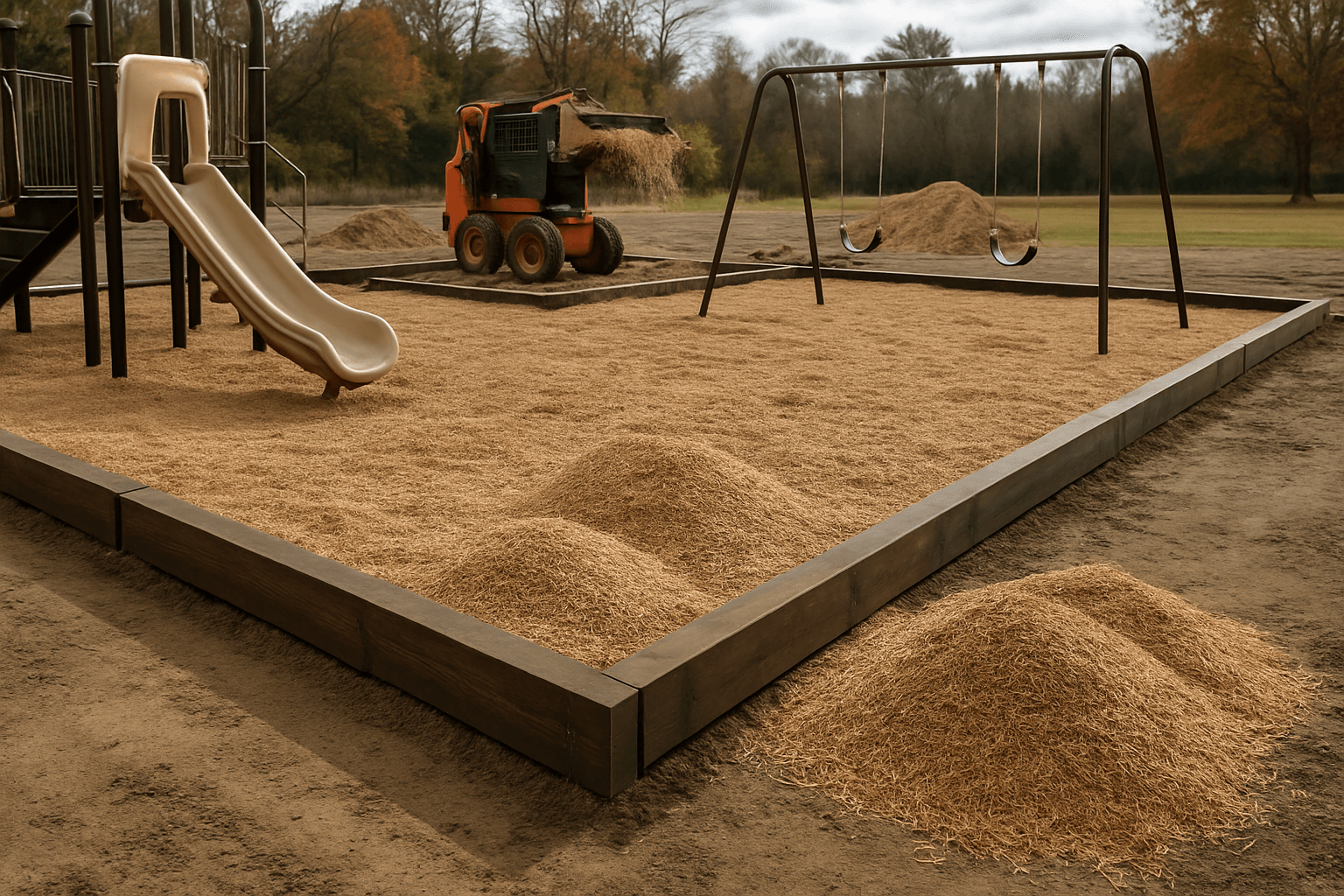
The call comes in on a Thursday afternoon. The general contractor is on site, your mulch has been down for two days, and now he's telling you that the playground opening is delayed because the surfacing isn't ready. You know that's not right. The mulch is in, it's at depth, and your crew was off site Wednesday.
This situation happens more than people talk about. General contractors have a lot of moving parts on a job, and surfacing subcontractors are easy to blame when something slips. Here is how to handle it without burning the relationship or eating costs that aren't yours.
Document Everything Before You Leave the Site
This is where the conversation gets won or lost, and it happened before the phone call. If you documented the install date, the depth measurements, the delivery ticket, and the site conditions at closeout, you have a defense. If you didn't, you're arguing from memory against someone with a clipboard.
Every playground surfacing job needs a site closeout record. Not a handshake. A dated document that includes:
- Date and time the crew was on site
- Mulch type and quantity installed
- Depth measurements at multiple points across the fall zone
- Photos of the finished surface, edge containment, and any adjacent work that was incomplete when you left
- A note of any other trades who were still active on site
Photos with embedded timestamps are your best friend here. They show the condition of the site when your work was done, and they show what other trades hadn't finished yet.
Read the Contract Before You Respond
Before you say anything to the GC, pull your contract and read the scope. What exactly did you agree to deliver? What were the completion milestones? Was there a specific date you committed to, or was your work tied to a predecessor task?
Construction contracts often define completion sequencing. If your surfacing install was supposed to happen after the concrete border was poured, and the concrete border was late, your completion date shifts accordingly. That's called a schedule delay caused by others, and it's typically not your liability.
Don't make an argument based on how you remember the job. Make it based on what the paperwork says.
Don't Accept the Blame in Writing
When a GC sends you an email blaming the delay on your work, don't respond with an apology or a vague acknowledgment. That email thread becomes project documentation. If this escalates to a dispute or a warranty claim, your words will be read by someone who's looking for an admission.
Respond professionally and factually. Something like: "We completed our scope on [date] per the agreed installation schedule. Attaching our site documentation from that date for your records. Let me know what specific issue you're seeing so we can review it together."
Keep the tone neutral. Offer to look at the problem. Don't admit to anything you don't know to be true.
Get Eyes on the Problem Before You Respond to the Problem
If the GC says the surfacing isn't ready, go look at it. Don't troubleshoot over the phone. You need to see what they're actually talking about before you can know whether it's your issue or someone else's.
When you get there, check the basics. Is the mulch at depth across the fall zone? Has anything been disturbed since you were on site? Is there containment damage that looks like equipment traffic happened after your install? Are there tire tracks or damage patterns that tell a story?
Sometimes you get there and the mulch is shallow in one area because equipment was parked on it after you left. That's not a surfacing failure - that's site management. Document it and bring it back to the conversation.
Know When to Escalate and When to Fix It
If the problem is legitimately yours, fix it fast and don't argue. A mulch depth that came up short in one zone, an edge that needs tamping, a containment board that shifted - none of these are worth a relationship. Get your crew back out there, correct it, and document the correction.
If the problem isn't yours, say so clearly, back it with documentation, and give the GC a path forward. "We didn't cause this, but here's what it would take to address it if you want to proceed."
A GC who's been around has seen subs blame each other on every project. The one who shows up with documentation, stays calm, and offers a solution instead of just arguing stands out. That's the sub who gets called on the next job.
Bottom Line
Blame on a construction site is mostly a documentation problem. The contractor who documented their work, kept the receipts, and can show the timeline wins the argument. The one who's going off memory loses it.
Stay organized on every job. Bring photos and paperwork to every closeout. When someone points a finger at your work, respond with facts before feelings. That's how you protect your margin and your reputation at the same time.