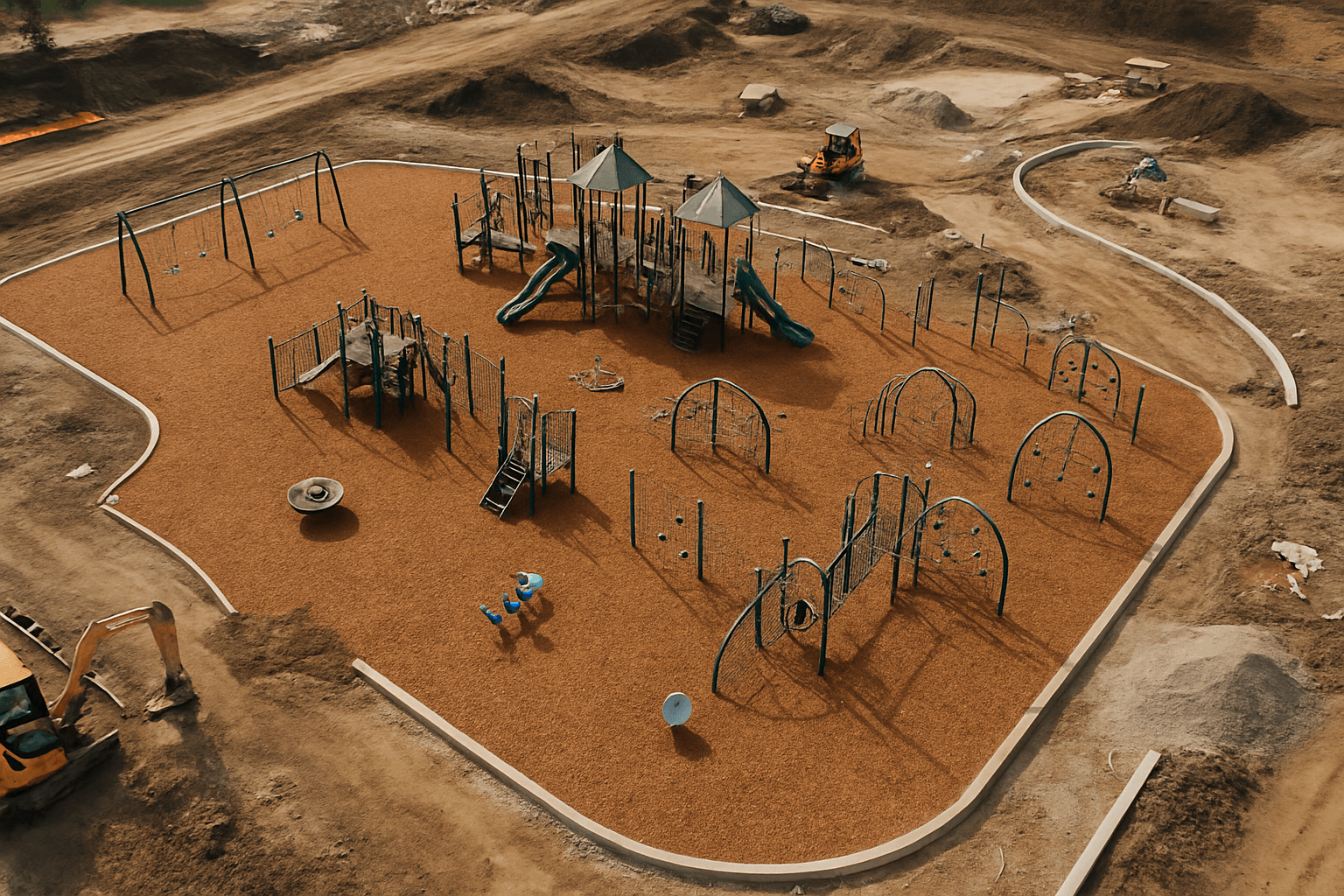
Phased construction is a scheduling challenge that doesn't care about your convenience. The owner breaks the project into phases because of funding, site access, or operational needs -- and you have to sequence your mulch delivery around work that's happening in stages across months or sometimes years. Here's how to handle it without leaving money on the table or creating compliance problems.
Understand the Phase Map Before You Quote
The biggest mistake on phased jobs is quoting as if it's a single installation. It almost never is. Get the project phasing schedule -- not just the overall completion date, but the date when each phase's equipment installation is done and when that phase needs to be open for use.
That schedule drives your mobilization plan. If Phase 1 equipment is installed in March and Phase 2 isn't until September, you're making two separate site visits, two separate deliveries, and potentially two separate mobilization charges. Your quote should reflect that.
Ask the project manager or GC for:
- Number of phases and planned completion dates for each
- Whether phases are contiguous on the site or in different areas
- Whether the site will be occupied and in active use between phases (which affects your access conditions)
- Whether there's any overlap where Phase 1 is open while Phase 2 is under construction adjacent to it
Staging Is Not a Free Service
On phased projects, staging areas are often limited. The GC may have a laydown area that's shared with other trades, or you may be asked to deliver only what's needed for the current phase to keep the site clean.
This is reasonable, but it has cost implications. Separate deliveries mean separate freight charges. If your Phase 1 delivery is 20 yards and Phase 2 is another 20 yards, you're not getting the freight efficiency of a 40-yard delivery. That needs to show in your pricing.
If there's room to stage the full volume early and your supplier can accommodate a split-unload -- where they deliver the full amount but only spread half, leaving the rest staged -- that's worth exploring. It reduces freight cost and simplifies scheduling, but it only works if you have secure staging space and the material can sit without contamination risk.
Sequencing Mulch Around Equipment Installation
Equipment has to be anchored before you spread. This rule doesn't change just because the project is phased. If Phase 2 equipment is going in adjacent to a completed Phase 1 safety zone, equipment installation work will generate debris -- sawdust, concrete from footing forms, packaging material -- that you don't want sitting on your Phase 1 surface or, worse, mixed into your Phase 2 mulch.
Coordinate with the equipment installer to confirm their Phase 2 work area is physically separated from your Phase 1 installation area, or that a barrier is in place. Document it. If contamination shows up in your Phase 1 surface from adjacent Phase 2 construction and your client points at you, you want documentation showing the separation plan.
Compliance at Handover for Each Phase
Each phase gets handed over to the owner when it's complete and ready for use. That means each phase needs to be in compliance -- correct depth, correct material -- at the time of handover, independent of the other phases.
Don't let the project timeline push you into cutting corners on Phase 1 with the intention of correcting it during Phase 2 mobilization. If Phase 1 is handed over at 10 inches when the spec calls for 12, that's a deficiency regardless of the overall project status. Handle each phase as a standalone installation from a compliance standpoint.
Pricing and Change Orders for Phase Delays
Phased projects often run late. Phase 2 slips two months because equipment delivery got pushed. Now your material pricing has changed, your crew schedule has shifted, and you're mobilizing at a time you didn't plan for.
Price protection language is important on phased contracts. A clause that says your Phase 2 pricing is valid for 90 days from Phase 1 completion, with material cost adjustments applied if Phase 2 mobilization is delayed beyond that window, protects you from absorbing price increases caused by someone else's schedule.
You're not the general contractor on most of these jobs. Your exposure to timeline risk should be limited to things you control.
The Communication Rhythm
On a phased project, check in with the GC or project owner before each phase mobilization -- not just when you're about to show up. A brief call or email three weeks out to confirm the phase schedule, site conditions, and any changes to the scope keeps you from being surprised and keeps your client from wondering if you're still on the job.
Phased projects create more touchpoints than single-phase installs. The contractors who build their reputation on these jobs are the ones who communicate proactively at each phase, not reactively when something goes wrong.