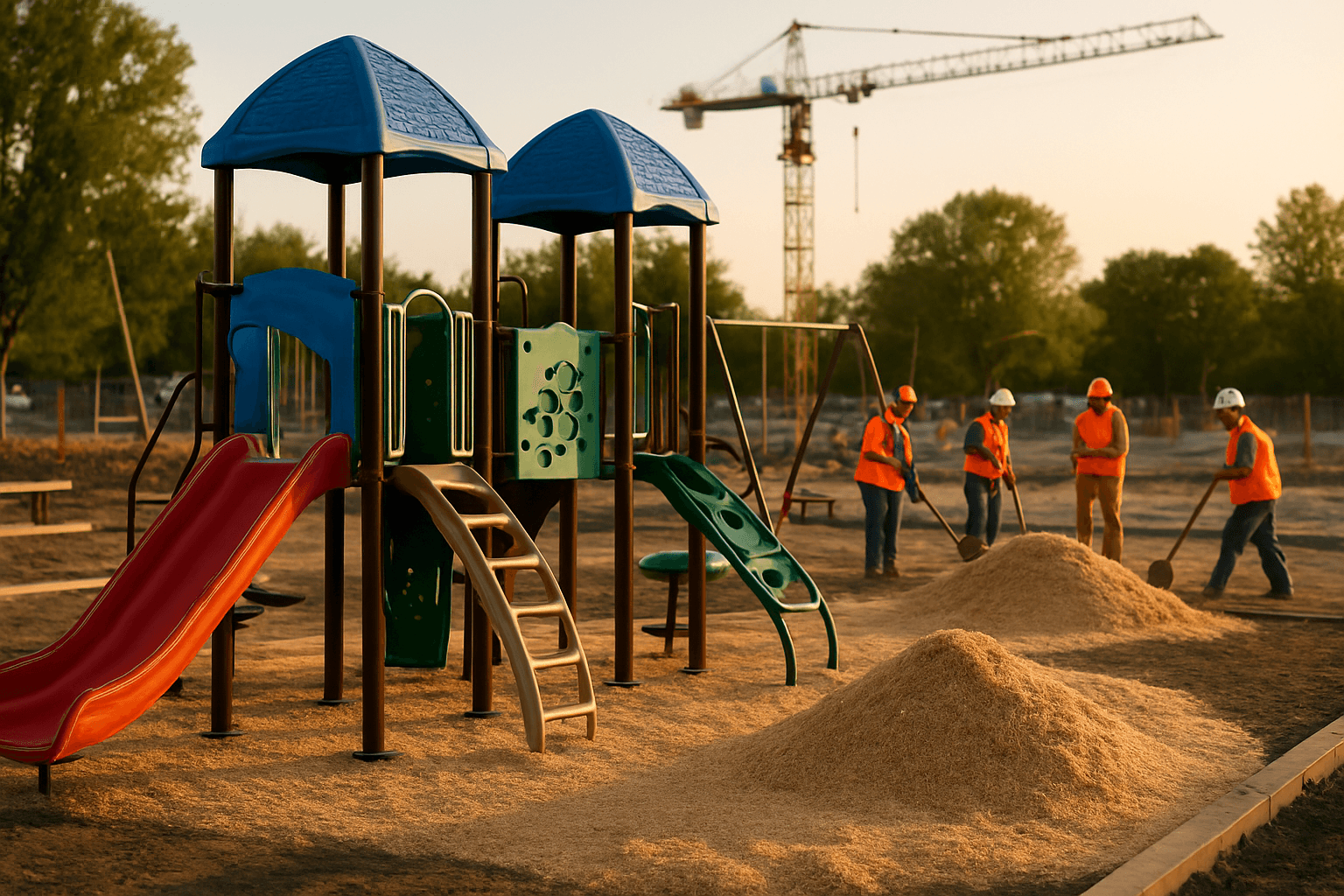
Equipment goes in. Then surfacing. That is the standard sequence. But getting the timing right between equipment installers and surfacing crews is where jobs get complicated.
When Surfacing Should Happen
Surfacing comes after equipment is anchored and footings are cured. The equipment needs to be stable before you spread mulch around it. Anything else creates problems.
If you surface before equipment install, the equipment crew will damage your work. Augers, concrete trucks, and heavy equipment crossing fresh mulch leave ruts and compaction. You end up doing the work twice.
If you wait too long after equipment install, the site sits incomplete. Clients get impatient. Inspections get delayed. Other trades stack up waiting for surfacing to finish.
The sweet spot is usually 3 to 5 days after equipment install, assuming concrete footings need that time to cure. Check with the equipment installer on their timeline and work backward from there.
Working Around Anchors and Footings
Equipment footings extend below the surface. Some are concrete piers. Some are direct bury posts. Either way, you need clearance around them during install.
Before surfacing, walk the site with a footing map or equipment layout drawing. Know where every anchor point is. Mark them if they are not obvious.
Spread mulch to the edge of the footing without burying the transition point. If the spec calls for a concrete collar or rubber surround at the base, that gets installed before surfacing, not after.
Protecting Fresh Mulch From Crane Lifts
Large equipment pieces come in by crane. The crane needs a stable pad, usually plywood or mats on compacted ground. Outrigger footprints can be 8 feet across.
If surfacing is already down when the crane arrives, you have a problem. Crane mats on fresh mulch compact it permanently. Outriggers puncture the surface layer.
Sequence the crane work before surfacing whenever possible. If the crane must come back after surfacing is down, protect the mulch with plywood sheets under the outrigger pads. Remove them immediately after the lift.
Communication Protocols
Get the equipment crew lead's direct phone number. Not the office. Not the project manager. The person on site making decisions.
Agree on notification windows. When they finish anchoring, they text you. When you are ready to spread, you confirm the footings are cured. If anything changes, you both know within hours, not days.
Put the sequence in writing before the job starts. Equipment install: dates. Surfacing: dates. Buffer between: specified. Who notifies who: named. This prevents the "I thought you knew" conversations that derail timelines.
Scheduling Windows That Work
Equipment installers prefer morning crane lifts when wind is calm. Surfacing crews prefer consistent weather windows, ideally no rain for 24 hours after spreading.
Find the overlap. If equipment is finishing Tuesday afternoon, surfacing can start Thursday morning. That gives footings time to cure and gives you a weather buffer.
Build float into the schedule. Equipment installs run long more often than they finish early. If the equipment is a day late, your surfacing start should flex without blowing the project deadline.
The Bottom Line
Good coordination with equipment installers comes down to communication and sequencing. Get the right contact, agree on the handoff, build in buffer time. Jobs where both crews know the plan run smoother than jobs where everyone is guessing.