The Number's Too Low. Now What?
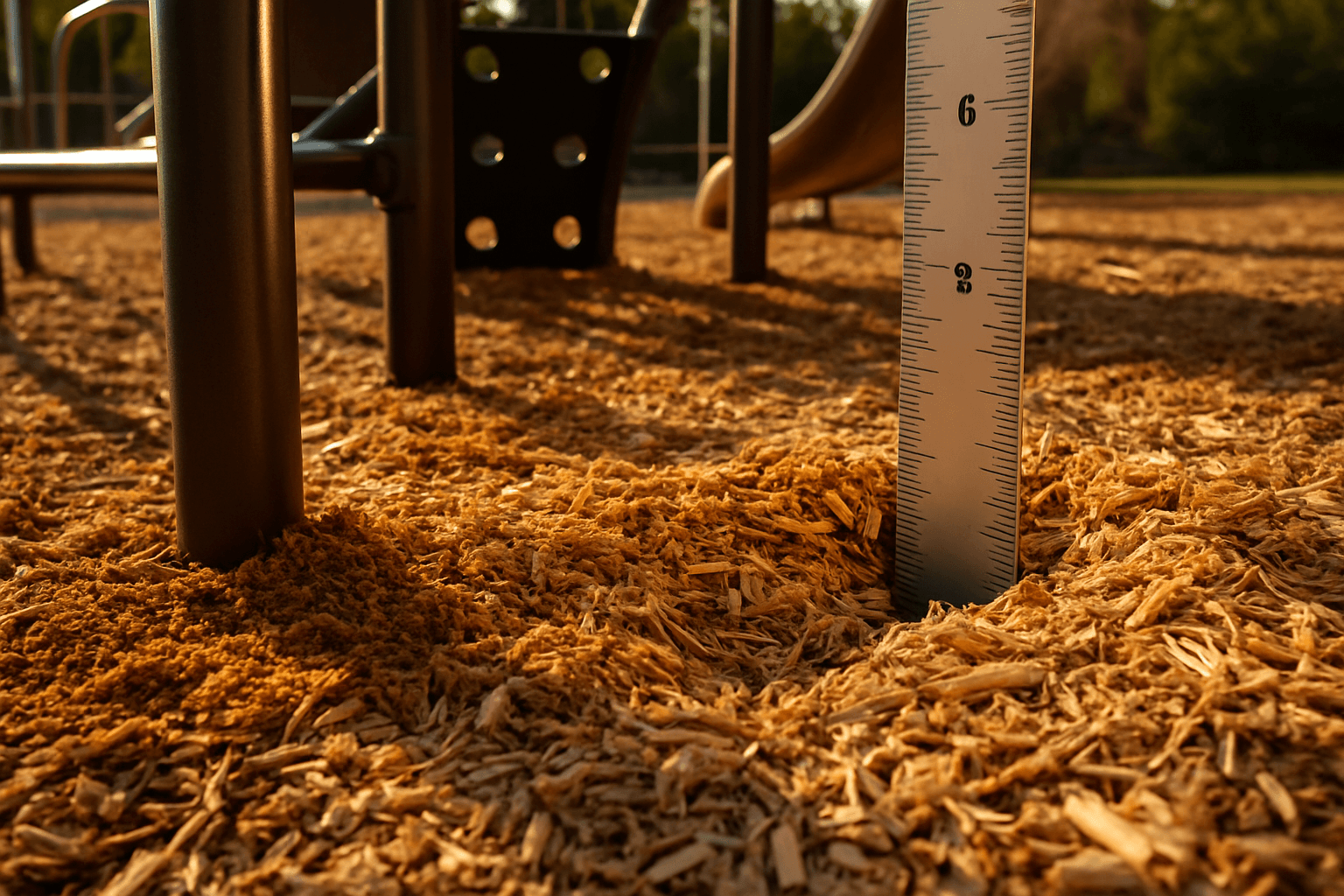
You pull the depth gauge after a fall inspection and you're sitting at 6 inches. ASTM F1292 says you need 9. There's a gap, and you need to close it before someone gets hurt, before an inspector writes you up, or before a job scope balloons because you guessed wrong on materials.
The question every facilities manager and playground contractor faces at some point: is this a top-off job, or does the whole bed need to come out?
Getting that call right saves money. Getting it wrong costs you twice - once to top off, and again when the mulch fails inspection eight months later anyway.
The Decision Framework
Here's the short version: top off when the mulch is depleted but the base material is still structurally sound. Replace when the mulch itself has broken down and can't do its job anymore.
Depth alone doesn't tell you which side of that line you're on. A bed sitting at 7 inches of clean, springy engineered wood fiber (EWF) is a different situation from a bed at 9 inches of compacted, matted, fungus-laced material that doesn't recover when you press down on it.
Top-off when:
- Depth is 30-50% below spec and the existing material is still loose and fibrous
- Mulch settles evenly with foot traffic, no hard spots or surface crust
- No visible mold, fungal fruiting bodies, or soil contamination at the surface
- Color is still consistent (fading is fine; dark patchy spots or white webbing are not)
Replace when:
- Mulch has compacted into a mat that doesn't spring back after compression
- You're seeing fungal growth, mold patches, or a sour/earthy smell pointing to decomposition
- The surface is saturated with debris (leaves, soil, organic matter) throughout the depth, not just at the top
- You've been topping off the same site every 12-18 months - that's the bed telling you it's done
What to Look For During Visual Inspection
The depth gauge gets you started. Your hands and eyes close the deal.
Push your fingers into the surface after your depth reading. Fresh EWF should resist slightly and spring back. If your hand sinks without resistance and the material clumps or stays compressed, you're looking at a replacement situation.
Check the bottom third of the bed too. Dig down and pull up a handful. If it smells like soil, looks dark and matted, and you can't identify any wood fiber structure in it, that material has decomposed past the point where it's absorbing impact the way it should be.
Fungal growth deserves a closer look. Surface-level mycelium is mostly cosmetic. Thick fruiting bodies (actual mushrooms or shelf fungi), or white and gray mycelium webbing through the full depth of the material, means the wood fiber is actively breaking down. Topping off won't fix that.
Depth Specs to Know Cold
ASTM F1292 sets the critical height requirements for loose fill surfacing. For EWF, here's where the numbers land:
- Falls up to 4 ft: 6 inches minimum
- Falls up to 7 ft: 9 inches minimum
- Falls up to 10 ft: 11 inches minimum
- Falls up to 12 ft: 12 inches minimum
These are post-compaction minimums. If you're measuring a settled bed and reading 9 inches under a 10-ft fall structure, you're already out of compliance. Don't measure where the surface looks undisturbed. Measure under the high-use zones - below the slide exit, in front of swings, at the base of climbing structures. Those spots run low first, and that's where an inspector is going to check.
How Much Material Do You Need?
For a top-off, the math is straightforward: square footage of the fall zone times the inches you need to add, converted to cubic yards. One cubic yard covers 100 square feet at 3 inches of depth, or roughly 50 square feet at 6 inches.
Example: a 2,000 sq ft fall zone sitting 3 inches below spec needs about 20 cubic yards to bring it back. That gives you a comfortable buffer for the compaction you'll see once the surface is in use.
For a full replacement, factor in removal of the existing material first. Pulling out 8 inches of degraded EWF across 2,000 square feet is roughly 50 cubic yards of waste. Then you're re-bedding fresh material to your target depth.
The cost math between top-off and replacement is real. A top-off typically runs 30-50% less than a full re-bed at the same square footage. But if you're doing top-offs every 12-18 months on a bed that should have been replaced three years ago, you've already spent the replacement cost twice - plus labor - and the surface still isn't performing right. That's money out the door with nothing to show for it.
Document Everything
Photos and depth readings don't just protect you legally, though they do that too. They make your next order estimate a lot easier and your client conversations cleaner.
Before any top-off or replacement job, walk the fall zone with a depth gauge and take readings at 8-10 points. Photograph the surface condition: overall depth, low spots, any contamination or compaction you're seeing. Log the date and the weather.
That record tells you what you ordered, why, and when. If a parent or inspector asks about the surfacing after an incident, you have a dated record showing the surface was in spec when you wrapped the job. That kind of documentation is worth a lot more than a verbal account three months later.
Photo documentation also gives you a baseline. If a fall zone is at 9 inches in October and 7 inches by April, you know how fast this particular surface is depleting - and you can plan your next top-off before you're scrambling.
Order Now, Beat the Rush
Fall inspection season is when every school district, parks department, and facility manager figures out they're short on depth. Demand spikes, and delivery slots tighten up fast.
A top-off job can sometimes wait a couple of weeks. A surface that's past replacement point can't - and if you're booking installs for October and November, lead times matter more than you'd think.
GetMulch ships certified IPEMA EWF and rubber mulch nationwide through 128+ depot locations. Get your quote lined up now and lock in your delivery window before your install dates fill. Your crew shows up ready to work - your mulch should be there when they are.