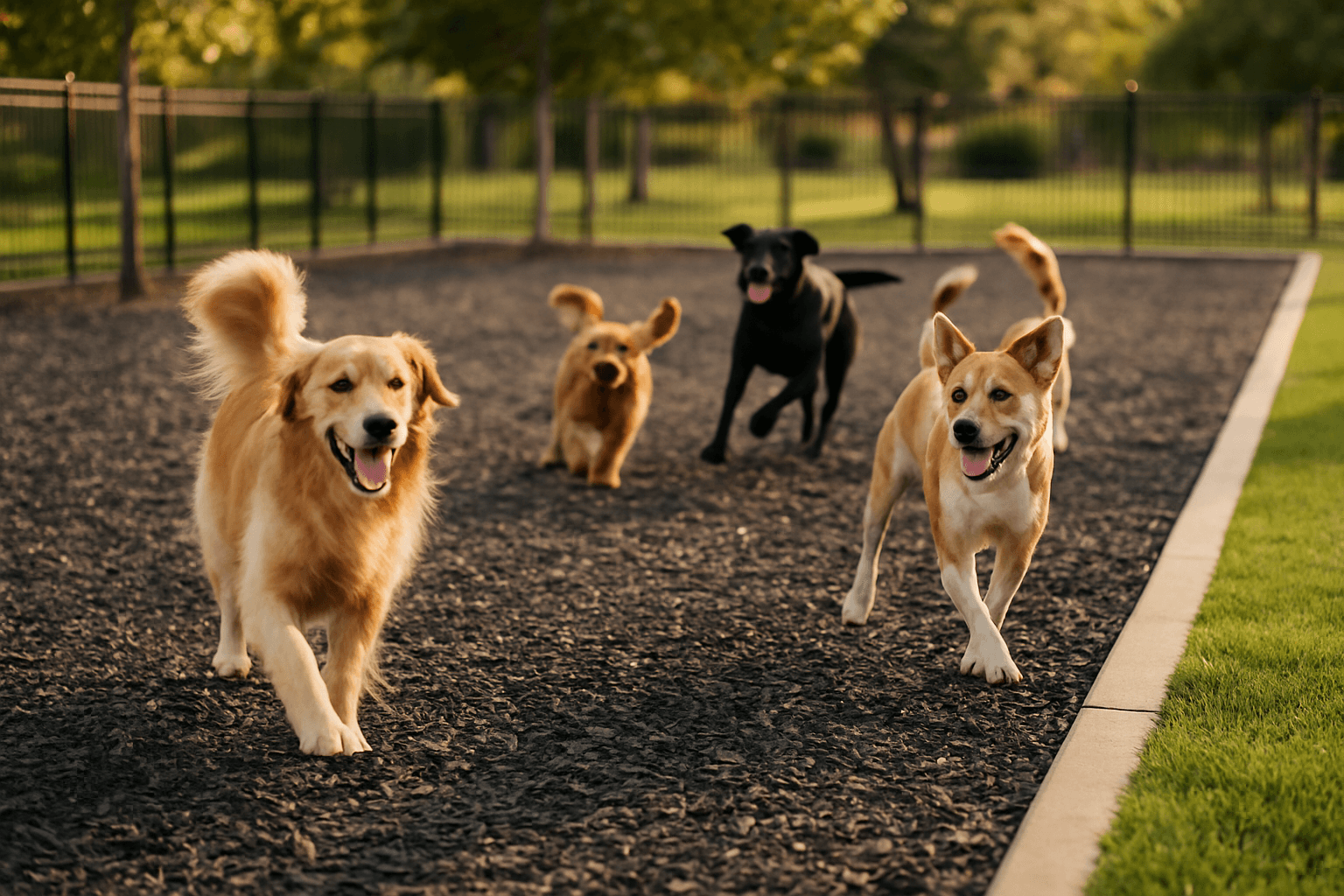
You get the call: a municipality wants a dog park. They've seen your playground work, they like the surfacing, and now they want the same approach for their new off-leash area. Sounds straightforward. It's not.
Dog parks chew through surfacing faster than almost any other public space. Between the digging, the waste, the constant high-traffic zones near gates and water stations, and the drainage demands that most standard playground surfacing wasn't designed for, picking the wrong material means callbacks you didn't budget for. Here's what actually holds up, what fails fast, and why the difference matters before you spec a single cubic yard.
What Dog Parks Actually Do to Surfacing
Playgrounds are tough on mulch. But dog parks are a different kind of punishment.
In a typical playground zone, you've got foot traffic, some impact zones under equipment, and the occasional rough patch where kids congregate. Dog parks have all of that, plus concentrated urine loads in specific spots, digging that pulls loose materials out of contained zones, and dogs that run at full speed and stop hard, repeatedly, all day long.
The combination creates problems that don't show up until six months after installation. Compaction happens faster. Drainage channels clog with displaced material. Smell becomes a real issue once organic material saturates. And if your surfacing shifts into a pile at one end of the run, you're getting a call about it.
Wood Mulch and Engineered Wood Fiber: Know the Limits
Wood chips and engineered wood fiber (EWF) are workhorses on the playground side. Loose, affordable, ASTM-compliant for fall zones, and easy to install. For dog parks, they're a compromise at best.
The drainage issue is real. EWF does drain, but it compacts under consistent urine loading in the same areas. Once saturated organic material starts breaking down, you get odor fast. In humid climates, that timeline shortens. You can mitigate this with regular raking and periodic replacement, but that means ongoing maintenance costs your client may not have planned for.
Digging is the other problem. Dogs dig. If your mulch is loose and organic, they'll move it. You'll see bare spots, especially along fencing where dogs pace. Containment borders help, but they don't solve it.
Bottom line: EWF in a dog park works short-term, especially in lower-traffic zones or smaller municipal projects where budget is the primary driver. Go in with eyes open about the maintenance cycle.
Rubber Mulch: The Durable Option with Trade-offs
Rubber mulch holds up to digging better than any loose organic material. It's heavier, it doesn't compact the same way, and it doesn't break down under waste the way wood does. For high-traffic areas near gates and water stations, rubber mulch is often the right call.
The drainage on quality rubber mulch is excellent. Liquids move through and don't pool. That matters for both cleanliness and safety. And the material stays put under running dogs better than wood-based options.
Here's the honest trade-off: rubber mulch is harder to clean than hardscaping. You can't hose it down the way you can a concrete pad. It requires periodic rinsing and raking. If your client expects zero maintenance, reset those expectations before installation day.
For dog parks with designated rest zones or agility equipment areas, rubber mulch makes sense under and around structures where fall protection still matters. Pair it with a permeable fabric base to improve drainage performance and reduce fines migration into the subgrade.
Pea Gravel: Solid Where It Fits
Pea gravel is popular in dog park design for good reason. It drains well, it doesn't break down, dogs can't really dig through it, and it's easy to rinse clean with a hose. For run areas without equipment, pea gravel in a properly contained, properly graded zone is one of the cleaner long-term solutions.
The limitations are in the details. Pea gravel needs solid containment. Without it, it spreads to paths, parking lots, and adjacent lawn areas, and you'll hear about it. Depth matters too: 3-4 inches on a compacted base with proper grade for drainage is the minimum. Skimping on depth creates a hard surface underfoot that puts stress on dog joints over time.
Pea gravel isn't appropriate under agility equipment where fall protection ratings matter. If the dog park includes any climbing or jumping features, stay with rubber mulch for those zones.
Zoning Your Dog Park Surfacing
The projects that hold up longest are the ones that don't treat the entire dog park as one surface type. Split it out:
- High-traffic entry zones and near water stations: Rubber mulch or pea gravel. Drainage and durability win here.
- Open run areas: Pea gravel with proper grade and containment, or grass where maintenance is in the budget.
- Agility or equipment areas: Rubber mulch for fall protection compliance.
- Shade and rest areas: EWF or pea gravel. Lower traffic, easier to maintain.
Getting your client to think in zones means you're not specifying one material that's perfect for nothing and okay for everything. It also gives you a cleaner conversation about change orders if they want to expand later.
The Drainage Conversation You Need to Have First
Most surfacing failures in dog parks trace back to one thing: drainage that wasn't designed for the actual use case. Before you spec material, you need to know:
- What's the native soil drainage rate?
- Is there a perimeter drain or subsurface drain system in place?
- How does the site grade?
- What's the urine load going to be at peak capacity?
A dog park that holds water will fail any surfacing you put in it. Don't let material selection be a band-aid for a grading or drainage problem. If the site isn't right, say so before the truck backs in.
Get the Right Material, Right When You Need It
GetMulch delivers rubber mulch, engineered wood fiber, and pea gravel to job sites across the region. Same-day and next-day delivery options mean your crew isn't waiting on material when you're ready to move. Request a quote at getmulch.com and tell us the project type. We'll make sure you've got the right product for each zone, in the right quantity.