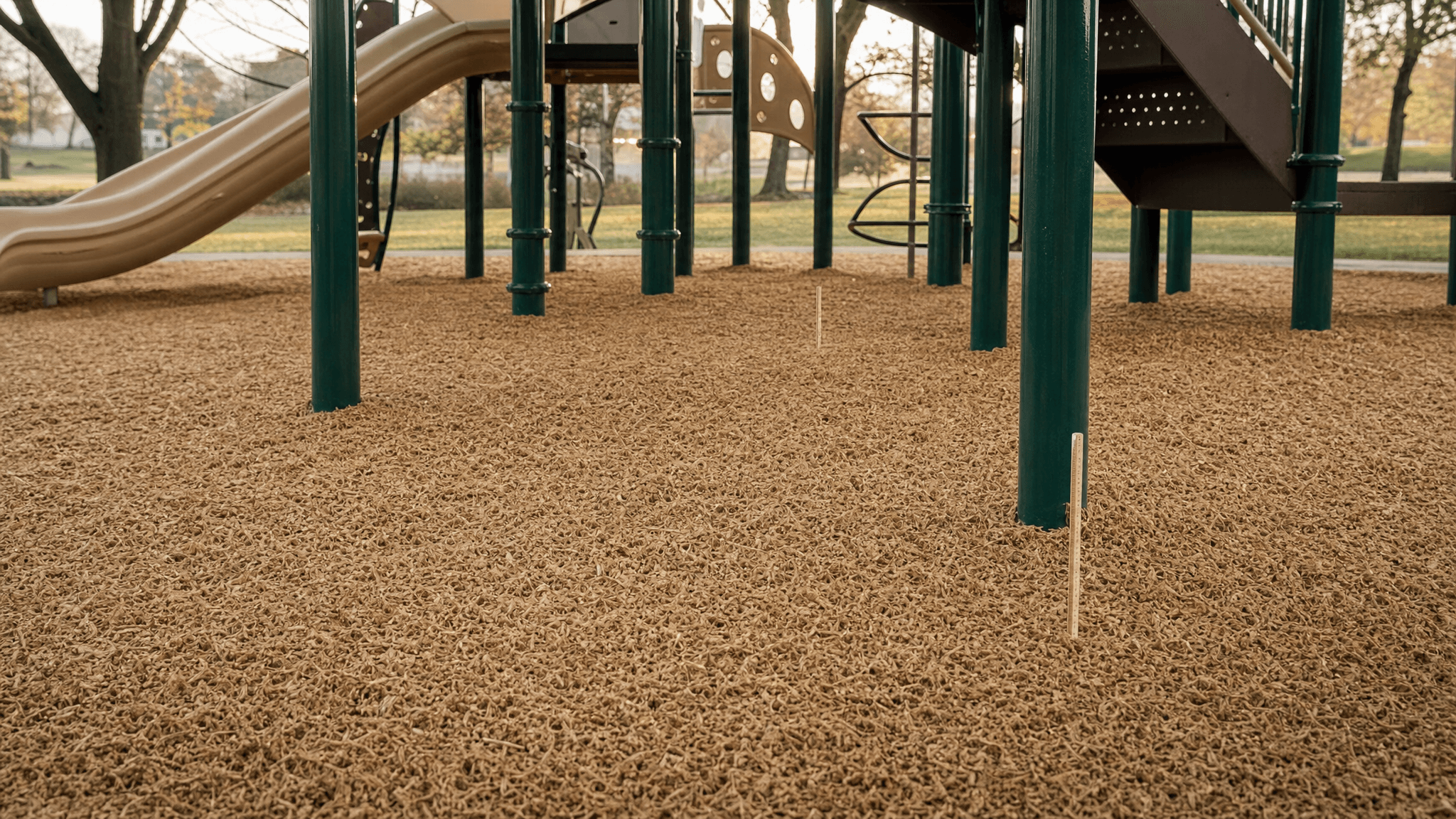
Procurement officers learn this lesson the hard way. A parks department releases an RFP for playground safety surfacing, the low bidder wins, and six weeks later the inspector shows up to find ungraded wood chips that don't meet ASTM F1292. The spec said "wood fiber mulch." That's what they got.
Vague surfacing specs don't just create headaches for the project manager. They create liability. When a child gets hurt on a surface that wasn't installed to standard, the documentation trail leads back to the bid spec — and whether the procurement office required the right materials in the first place.
Here's what to put in your spec to avoid that problem.
Require Specific Certifications, Not Just Material Names
Calling out "wood fiber mulch" or "rubber mulch" isn't enough. Any wood product can technically be labeled wood fiber. Your spec needs to require:
- IPEMA certification (International Play Equipment Manufacturers Association): Third-party certification that a product has been tested to ASTM F1292. Every delivery should come with a Certificate of Conformance showing the IPEMA certification number, product name, and critical fall height rating.
- ASTM F1292 compliance: The standard governing impact attenuation of surfacing materials under and around playground equipment. Vendors should provide actual test results, not just claim compliance.
If a vendor can't give you an IPEMA certificate number, they're not certified. Don't accept materials without documentation.
Specify Depth by Equipment Fall Height
The most common spec gap: requiring a material without specifying depth. Depth requirements under ASTM F1292 vary by material type and the fall height of the equipment being installed. A blanket "12-inch depth" requirement will be wrong for some installations and costly overkill for others.
Build this reference into your spec:
| Equipment Fall Height | EWF Minimum Depth | Rubber Mulch Minimum Depth | |---|---|---| | Up to 4 ft | 6 inches | 6 inches | | Up to 6 ft | 9 inches | 6 inches | | Up to 8 ft | 12 inches | 6 inches | | Up to 10 ft | 12 inches | 6 inches | | Up to 12 ft | 12 inches (at material limits) | 9 inches |
EWF compacts over time. Spec installed depth at 15-20% above the minimum to account for compaction. Rubber mulch compacts less, but still warrants a 10% overage on multi-layer applications.
Your spec should state both the minimum installed depth and the compaction buffer, broken down by equipment zone.
Include Drainage and Compaction Language
Spec the sub-base, not just the surfacing material. A complete drainage spec includes:
- A compacted sub-base or pea gravel drainage layer before surface material is placed
- Minimum 1% grade to allow water to drain away from fall zones
- Containment edging (borders or rubber curbing) to prevent material migration outside the fall zone
Without this language, bidders will skip the drainage layer. The surface passes inspection on day one and turns into a muddy tripping hazard after the first heavy rain.
Specify Delivery and Staging Requirements
Public procurement projects often involve active school grounds, parks with pedestrian traffic, or phased construction schedules. Delivery logistics belong in your spec. Cover:
- Delivery window restrictions (school hours, park peak times)
- Staging area requirements: dimensions, surface type, access gate width (minimum 12 feet for delivery trucks)
- Material storage conditions: EWF must stay dry; require covered staging or indoor storage if delivery precedes installation by more than 48 hours
- Advance notice: vendor must confirm delivery date at least 72 hours ahead of time
Skip this section and you'll get deliveries that show up unannounced and block a school drop-off lane.
Define Acceptance Criteria Before the Bid Opens
The acceptance criteria section tells vendors exactly how the work will be judged, and it protects you when materials don't meet spec. Include:
- Depth verification at a minimum of five measurement points per fall zone (swings, slide exits, climbers, and perimeter)
- Visual inspection for material uniformity: no debris, rocks, or contaminated wood in EWF loads
- IPEMA certificate required before payment is released
- Written delivery documentation from the vendor showing product name, lot number, quantity, and certification number
This isn't just enforcement language. It's your paper trail if something goes wrong after closeout.
Sample Spec Language You Can Adapt
Here's a condensed block for EWF installations:
The contractor shall furnish and install engineered wood fiber (EWF) surfacing material certified to ASTM F1292 by IPEMA. The contractor shall provide an IPEMA Certificate of Conformance prior to delivery, identifying the product name, certification number, and critical fall height rating. Installed depth shall be no less than [insert depth per zone] at post-installation verification, measured at a minimum of five points per fall zone. The sub-base shall include a compacted drainage layer of [specify material] prior to EWF placement. Material shall be contained by [specify edging type]. Depth verification documentation shall be submitted to the owner prior to final payment.
Adjust the bracketed fields for your project's equipment fall heights and site conditions. For rubber mulch or poured-in-place rubber, the depth minimums change, but the certification and documentation requirements stay the same.
Get the Spec Right the First Time
A well-written surfacing spec makes sure the right product shows up at the right depth with the documentation to prove it. A vague spec gives bidders room to cut corners and leaves your agency holding the liability if something goes wrong.
GetMulch supplies IPEMA-certified playground surfacing with full compliance documentation on every order: Certificate of Conformance, material specs, and delivery records ready for your project file. If you're writing a spec and want to confirm what certification language to require, request a quote at getmulch.com — we can help you get the language right before the bid goes out.