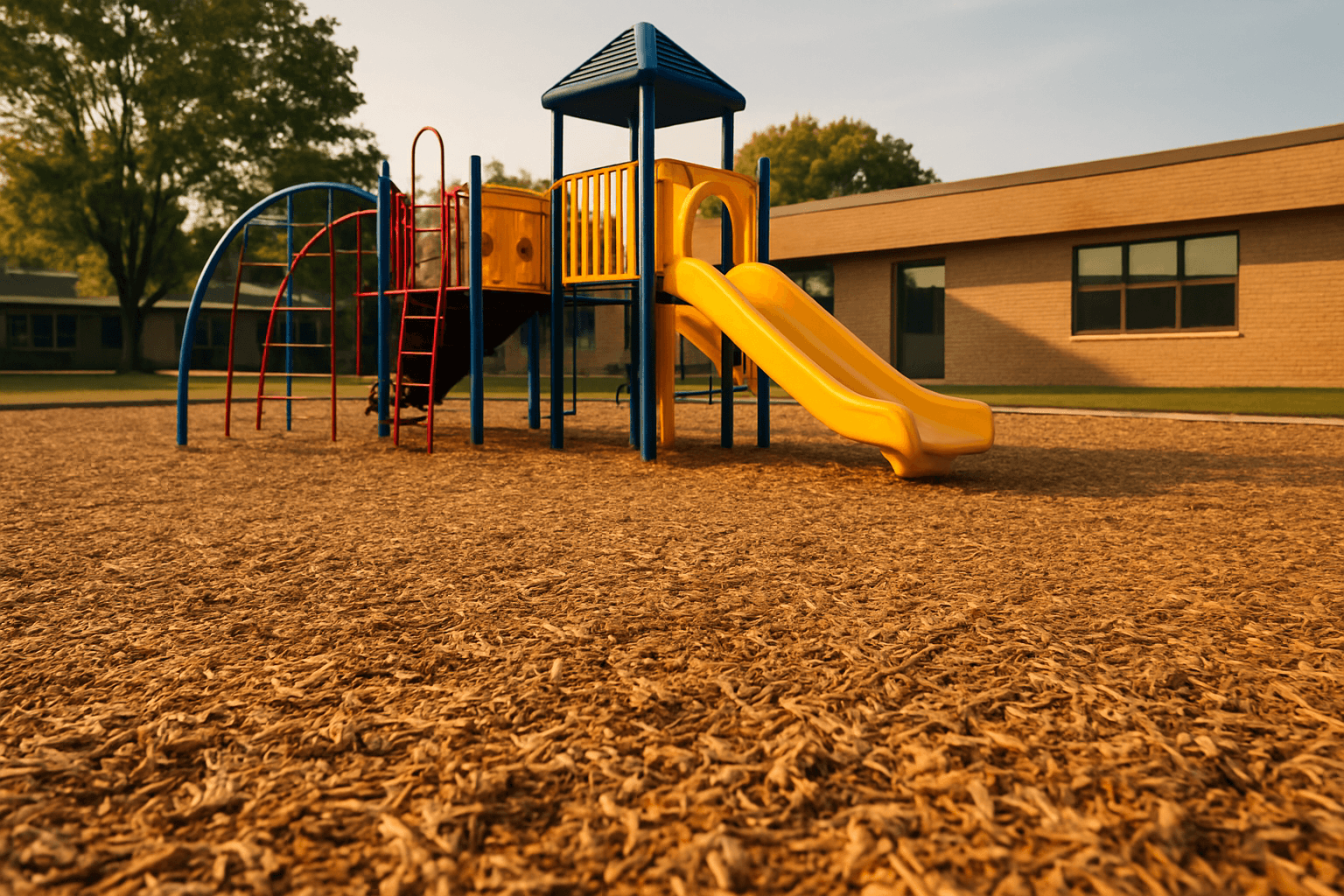
Summer Does More Damage Than You Think
If your school playground has been sitting through July heat without kids on it, don't assume the surfacing is fine. Engineered wood fiber compacts. It displaces. Heavy rains push it toward the edges. UV exposure starts breaking down the fibers. By late August, that 12-inch install from last fall might measure 9 inches at the swing bays.
That's not a cosmetic problem. Under ASTM F1292, your surface has to maintain a minimum depth based on the fall height of your equipment. If it doesn't, you're out of compliance the first day kids are back.
This is the window - July and August - when facility managers catch the problem before it becomes a liability.
What ASTM F1292 Actually Requires
ASTM F1292 is the standard that defines how much cushioning a playground surface has to provide at specific fall heights. The rule is built around critical height - the maximum height at which a life-threatening head injury is not likely to occur.
Here's the short version for engineered wood fiber:
- 6-inch depth: protects to 7 feet critical height (uncompacted)
- 9-inch depth: protects to 10 feet
- 12-inch depth: protects to 11 feet
The catch? Those numbers assume the material is IPEMA-certified and installed at the rated depth. Once it compacts, your effective critical height drops. A surface that started at 9 inches and is now reading 6.5 inches in the swing zone no longer meets spec for equipment with a 10-foot fall height.
To check compliance, you need a penetrometer or depth probe and readings at five or more points per zone: under swings, at slide exits, around climbing structures. Check the lowest reading in each zone. That's your compliance number, not the average.
How Much Depth to Expect to Lose
EWF compaction rates vary by traffic, weather, and material quality. A reasonable field benchmark: expect 15-25% compaction over a school year under normal use. Summer heat without heavy foot traffic slows that rate, but it doesn't stop it.
Rain events cause displacement. The fiber moves toward containment edges and low spots. If your playground has any grade to it, check the uphill side of equipment zones first. That's usually where the depth drop shows up.
Bottom line: if it's been more than six months since your last depth inspection, assume you're short. Measure first, then order.
What to Order - and When
September is one of the most congested delivery months for playground mulch. School districts, childcare centers, and park departments all hit the same window. Suppliers get backed up.
If you're ordering EWF or rubber mulch to bring a surface back into compliance before a September opening, order by mid-August. That gives you:
- 2-3 weeks of lead time to secure the order and schedule delivery
- Delivery in the last week of August
- A few days for your crew or installer to spread and settle the material
Don't wait until late August. Placing an order on August 25 hoping for an install by September 2 means rolling the dice on crew availability and delivery windows. It's a coin flip you don't want to lose the week before school starts.
What GetMulch Handles vs. What You Handle
A lot of facilities teams get confused here. GetMulch delivers IPEMA-certified engineered wood fiber or rubber mulch direct to your job site, typically within 48 hours of ordering. The material comes with full compliance documentation: IPEMA certificate numbers, product specs, and delivery records you can keep on file.
What GetMulch doesn't do is install it. Spreading, raking, compacting, and depth-verifying the final surface is your crew or your installer's job. If you don't have maintenance staff who can handle the spread, contract a local playground installer in advance.
Your pre-fall checklist should cover:
- Depth inspection at all primary fall zones (penetrometer or depth probe, 5+ readings per zone)
- Containment check - edging secured, no gaps where fiber is escaping to surrounding areas
- Material audit - estimate the volume needed to bring all zones back to rated depth
- Order placement - aim for mid-August to hit a September 1-5 opening
- Install coordination - confirm who is spreading the top-off material and when
Start Now, Not in September
If your playground opens in September, you've got about six weeks. That's enough time to inspect, order, and install - but only if you start now. Waiting until the week before school starts leaves no room if the delivery is delayed or if the surface needs more material than you estimated.
GetMulch can turn around quotes quickly. If you know your fall height requirements and approximate square footage, a quote is straightforward. Head to getmulch.com/get-a-quote and provide your site dimensions. The team will confirm product, volume, and delivery timing.
Don't let September 2 be the day you find out your surface doesn't meet ASTM F1292.