The Budget Line That's Missing Three Real Costs
Most facility directors budget for playground surfacing the same way: look at the materials quote, check it against last year's line item, and approve. That approach consistently misses the three costs that actually matter.
Here's what doesn't show up in the materials quote — and why it should drive your procurement decision.
The Mulch Is Not the Expensive Part
The materials quote is the cheapest part of this equation.
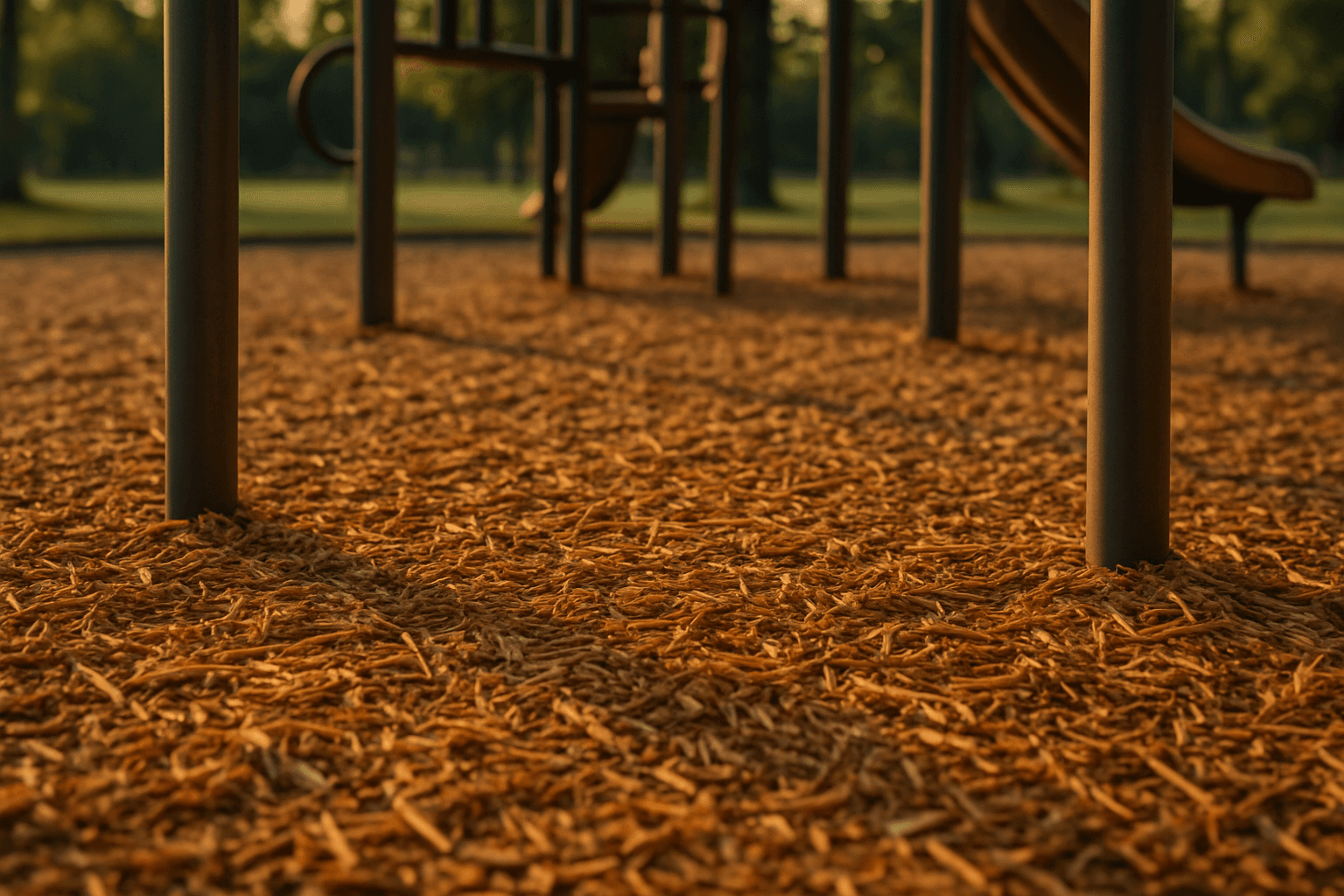
ASTM F1292-certified engineered wood fiber (EWF) typically runs in the $8,000 to $15,000 range for a mid-size playground installation. Manageable. Predictable. Easy to approve.
What doesn't show up on that line:
Replacement labor. EWF degrades and displaces over time. A playground with heavy summer traffic needs a top-off or full replacement every two to four years. If your facilities crew handles that, you're looking at four to eight labor hours per refresh. If you contract it out, add mobilization and setup fees. Neither figure appears in the original bid.
Inspection and documentation. ASTM F1292 compliance is not a one-time certification. It requires periodic depth testing, surface condition reviews, and documentation that can be produced in the event of a claim. Many facilities have no system for this. The documentation gap is where liability exposure lives.
Incident costs. A fall injury on a playground without certified surfacing, or without documentation showing the surfacing was installed and maintained to standard, can run $150,000 to $500,000 in settlement costs before defense fees. One incident wipes out 10 to 30 years of materials savings from buying cheaper, non-certified product.
Why Certified Surfacing Is a Financial Decision
Facility directors sometimes push back on IPEMA-certified materials on price. The certified product costs 10 to 20% more than uncertified alternatives. Over a five-year planning horizon, that gap looks meaningful. It isn't.
What certification actually does: it creates a documented chain of custody from manufacturer to installation that your insurance carrier and legal team can rely on in a claim. Without that documentation, you're arguing from memory. With it, you have a clear record showing the surface met ASTM F1292 at installation, was maintained to standard, and was inspected on a reasonable schedule.
Insurance carriers are paying attention to this. Some are now factoring playground surface certification into coverage terms and renewal pricing. The facility that can produce IPEMA certs and inspection logs negotiates from a different position than the one that can't.
Where Procurement Decisions Go Wrong
The most common budget mistake isn't overspending. It's under-speccing.
When procurement requirements are vague, the wrong product shows up on site. "Playground mulch, engineered wood fiber, 12 inches installed" sounds specific. It isn't. Without requiring IPEMA certification, specifying critical height rating by equipment fall height, and including drainage language, you're leaving material selection to whoever has the lowest bid.
That's not the vendor's fault. Vague specs produce cheap bids. The risk transfers back to your organization invisibly at bid time and shows up painfully when something goes wrong.
What your spec language should include:
-
Material certification: IPEMA-certified engineered wood fiber or rubber mulch meeting ASTM F1292 at the required critical height
-
Depth by fall height: 9 inches minimum for equipment with fall heights up to 8 feet; 12 inches for fall heights up to 12 feet
-
Drainage requirement: Minimum 4-inch compacted stone base with permeable geotextile fabric
-
Acceptance criteria: Post-installation depth verification at multiple test points; IPEMA cert and material data sheet required at closeout
-
Delivery staging: Confirm site access, dumping location, and haul-off plan if existing surface is being replaced
Requirements like these protect your organization. They also make competitive bids comparable — you're pricing like products, not concrete against cinder blocks.
The Vendor Consolidation Advantage
Many facility departments manage playground surfacing through a patchwork of local suppliers. A regional parks department might have three different vendors across eight playgrounds, with different certifications, different documentation practices, and different lead times.
That's an administrative burden that doesn't show up in the materials budget. Staff time spent sourcing, comparing bids, tracking certs, and chasing delivery confirmations is real cost. So are the gaps when a local vendor can't service a remote site and the playground sits out of compliance.
Centralizing surfacing procurement through a single supplier with national depot coverage closes those gaps. One spec. One point of contact. Consistent documentation across all sites. For a portfolio of ten or more playgrounds, that consolidation pays back in staff time and compliance consistency.
GetMulch works with facility departments managing anywhere from two playgrounds to multi-site regional portfolios, with 128 depot locations and IPEMA-certified materials from vetted providers nationwide. If you're managing multiple sites, a consolidated quote is worth the conversation.
Three Numbers Every Facility Director Should Track
The facility directors who get playground surfacing right track three metrics:
Total cost per playground per year. Materials plus replacement labor plus inspection time. Not just the initial install.
Replacement interval. How often is the surface being topped off or replaced? If you don't know, that's a gap in your maintenance records that will matter when you need to justify the budget line — or defend a claim.
Documentation coverage. Can you produce IPEMA certs and inspection records for every playground in your portfolio? If the answer is "most of them," you have exposed sites.
None of these numbers are hard to track. Most facilities just don't ask for them at procurement time, and by the time they matter, the original vendor is three seasons gone.
Stop Budgeting for Materials, Start Budgeting for Risk
Playground surfacing is a risk management decision that gets treated as a materials purchase. The difference costs facility directors real money when things go sideways.
Spec certified materials. Require documentation at closeout. Set a maintenance inspection cadence. Get the full cost picture in your budget model before you approve next year's line item.
If you're working through a procurement cycle now, GetMulch can help you spec the right product for your equipment fall heights, confirm coverage for your locations, and put documentation processes in place that hold up under review. Get a quote at getmulch.com.