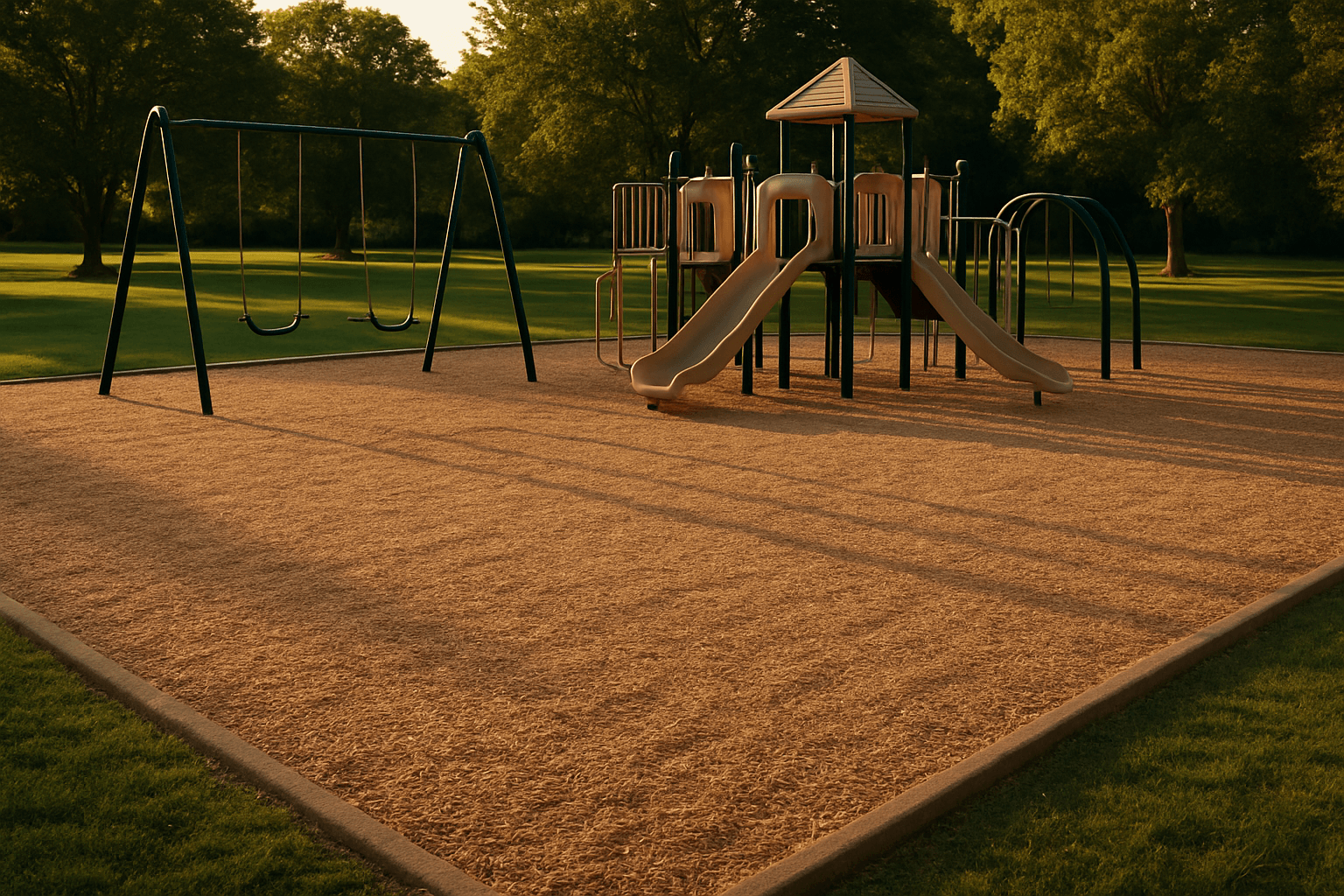
Late summer doesn't look like a buying opportunity. Playgrounds are running full tilt, budgets are in mid-year review, and the surfacing problem you're worried about is still three months away.
That's exactly why August is the smartest time to order.
Every Year, the Pattern Repeats
Spring arrives. Playgrounds open. Facilities managers discover the mulch is down to nothing. Emergency orders go in. Suppliers are slammed. Prices are 20-35% higher than the baseline. Delivery windows stretch from days to weeks.
Then fall hits - right before school inspection season - and it happens again.
The fix isn't complicated. It's a calendar problem, not a logistics problem. And the window to solve it is right now.
Why the Summer Quiet Window Matters
Mid-July through August sits in the quietest stretch of the playground surfacing calendar. Spring install season is winding down. Fall rush hasn't started. Suppliers have inventory available, delivery crews have capacity, and pricing is stable.
Order now and you control three things you can't control during peak season: timing, price, and material selection.
Here's how the demand calendar actually breaks down:
- Spring (March-June): Highest demand, longest lead times, premium pricing on emergency top-offs. The six-week window between spring thaw and Memorial Day is brutal for supply chains.
- Summer peak (June-July): High demand from summer camp openings and park renovation projects funded by prior-year budgets.
- Late summer (August-September): Demand drops. Suppliers catch their breath. This is your window.
- Fall (October-November): Inspection season. School districts and municipalities scramble to address deficiencies found in audits. Emergency ordering spikes again.
- Winter: Frozen ground, weather delays, limited installation windows in northern markets.
If you're not ordering mulch in August, you're planning around everyone else's emergencies.
The Real Cost of Ordering Late
When facilities managers order reactively, they're typically paying two or three price premiums at once.
Emergency delivery surcharges run 15-25% above standard rates. Material premiums for small or unscheduled orders add another 10-20%. And the hidden cost - the one that never makes it into the budget analysis - is staff time spent managing a crisis instead of executing a plan.
A parks department with eight playground locations ordering reactively across a season can easily spend $12,000-$18,000 more than a department with the same footprint that pre-plans. That's not a rounding error. That's another location's full annual maintenance budget.
What to Assess Right Now
Before you order, you need to know what you actually have. A pre-order assessment takes less time than most people expect, and it drives every subsequent decision.
Walk each surface. Measure depth at the five high-wear zones: under swings, at slide exits, at climber bases, along main access paths, and near equipment borders. Use a depth gauge, not a visual estimate. The number you need is current depth vs. the ASTM F1292 critical height requirement for your specific equipment.
The standard rule: if you're at 80% or below of required depth, you're looking at top-off material. At 60% or below, you're likely ordering a full replenishment.
Document everything. Photos with a depth gauge visible. Dated readings by location. This documentation serves double duty - it tells you what to order, and it's the first thing you need if there's ever a liability claim.
Multi-Site Management: Where the Savings Stack
Single-location facilities have limited buying power. Multi-site operations - parks departments with five or more locations, school districts with multiple campuses, nonprofit networks running regional programs - have real purchasing advantage in annual negotiations.
Volume commitments unlock two things most facilities managers don't realize they can negotiate: committed pricing locked through the following season, and reserved inventory allocation. If you tell a supplier in August that you're managing 12 locations and you want a pre-committed rate for 12 months, you're not just buying mulch. You're buying price predictability and supply security.
GetMulch works with multi-site facility operators exactly this way. Annual agreements cover your full portfolio, standardized material specs across all locations, and delivery scheduling that fits your inspection and maintenance calendar - not ours.
What You're Actually Buying When You Plan Ahead
It's not just mulch. It's time.
When the fall inspection schedule hits and an auditor finds a depth deficiency at one of your locations, the correct response is "we're scheduled for a top-off delivery next week." That answer is only available if you planned ahead. Otherwise, the answer is "we're working on getting a quote" - and that answer makes risk managers and attorneys nervous.
Planning ahead also gives you the space to specify correctly. Engineered wood fiber for higher-traffic locations. Rubber mulch where you need durability and lower maintenance frequency. When you're ordering in an emergency, you order what's available. When you're ordering in August, you order what's right.
Three Steps to Get Ahead of the Rush
Step one: Complete depth assessments at every location. Use ASTM F1292 standards as your benchmark. Any zone below critical height depth is a priority order.
Step two: Get a site-by-site quote covering your full inventory needs. Know the material, cubic yards per location, and your target delivery window for each site.
Step three: Lock in the order before September. Not because anything dramatic happens on September 1st, but because every week you wait is another week closer to fall rush pricing and compressed delivery schedules.
GetMulch works with parks departments, school districts, and facility management companies across the country to pre-plan their surfacing calendars. Get a site-by-site quote at getmulch.com/get-a-quote.