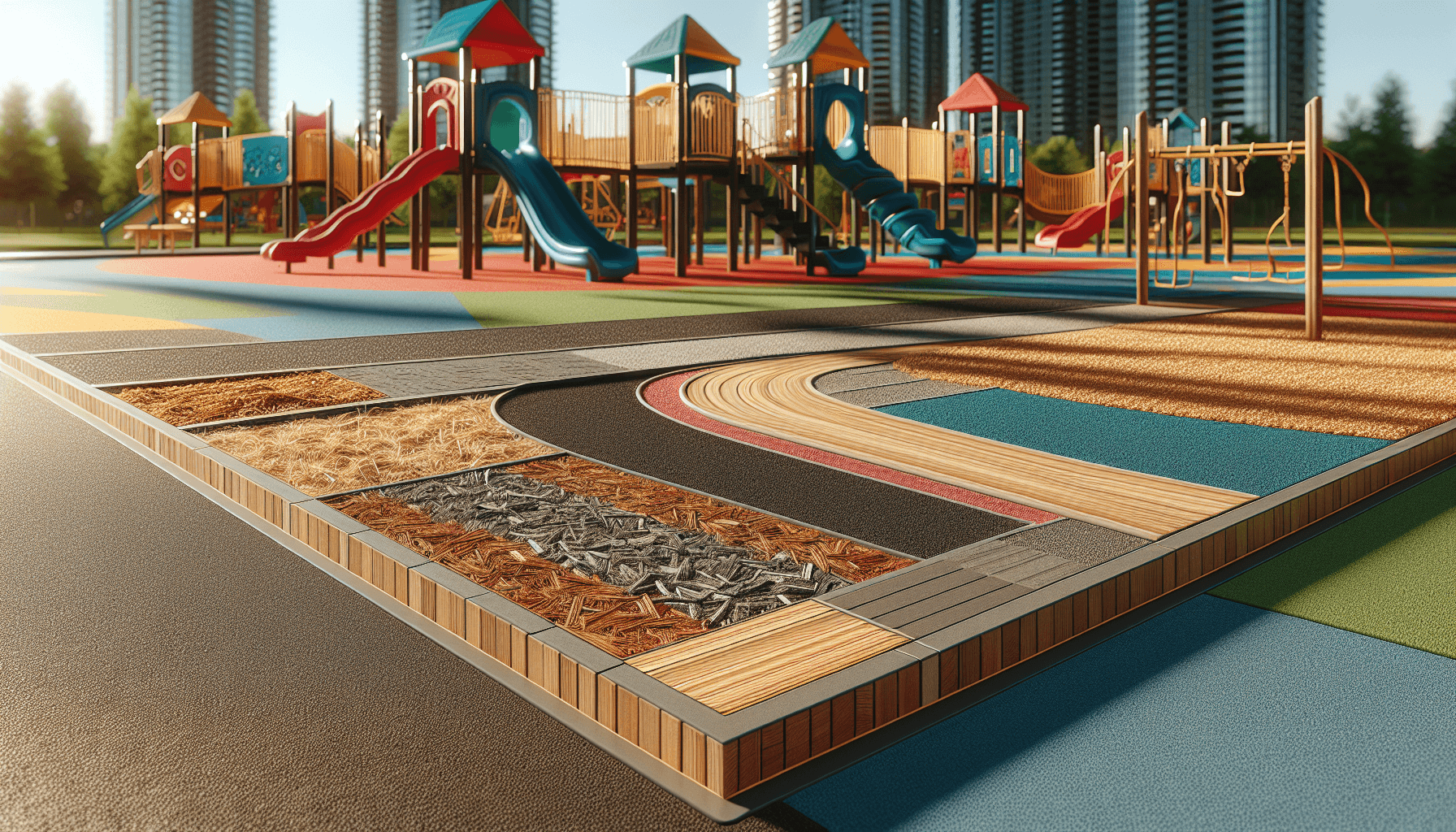
Choosing the right playground surfacing material isn't just about aesthetics or initial cost—it's about safety compliance, long-term durability, and installation efficiency. With multiple material options available and strict ASTM standards to meet, playground builders need a practical understanding of what works, where, and why.
This guide breaks down the core playground surfacing materials, ASTM F1292 compliance requirements, and installation best practices to help you specify and install surfacing that protects kids and meets inspection standards.
Playground Surfacing Material Options
Engineered Wood Fiber (EWF)
Engineered wood fiber is the gold standard for playground surfacing in commercial installations. Unlike standard wood chips, EWF is specifically processed to meet ASTM F1292 critical height requirements.
Key characteristics:
- Consistent particle size and shape for predictable impact attenuation
- ASTM F1292 certified for specific critical heights when installed at proper depth
- Natural appearance that blends with outdoor environments
- Requires 9-12 inches of depth for typical playground equipment
- Needs periodic topping off as material compacts and degrades
Best for: Parks, schools, daycare centers, and commercial playgrounds where natural aesthetics and proven safety performance matter.
Installation notes: EWF requires proper site preparation with adequate drainage. The material needs containment borders to prevent migration. Initial compaction will occur in the first few weeks—plan for a topping-off service 30-60 days after installation.
Rubber Mulch
Rubber mulch, made from recycled tires, offers long-lasting impact attenuation with minimal maintenance requirements.
Key characteristics:
- Longer lifespan than organic materials (10+ years vs. 5-7 years for EWF)
- Does not decompose, so depth remains consistent
- Available in multiple colors for design flexibility
- ASTM F1292 compliant when installed at specified depths
- Does not attract insects or support mold growth
Best for: High-traffic commercial playgrounds, splash pad surrounds, and installations where long-term cost-per-year matters more than upfront price.
Installation notes: Rubber mulch is heavier than EWF and requires robust containment. It does not compact like organic materials, so initial depth calculations are critical—what you install is what you get.
Poured-in-Place (PIP) Rubber
Poured-in-place surfacing creates a seamless, ADA-accessible surface by mixing rubber granules with polyurethane binder on-site.
Key characteristics:
- Completely accessible for wheelchairs and mobility devices
- Customizable colors and patterns
- No loose-fill maintenance required
- ASTM F1292 compliant with proper base and wear layer thickness
- 10-15 year lifespan with minimal upkeep
Best for: ADA-priority installations, inclusive playgrounds, and projects where accessibility is non-negotiable.
Installation notes: PIP requires expert installation. Weather conditions during installation are critical—rain or high humidity can compromise the binder cure. Budget for professional installation and proper base preparation.
Wood Chips (Playground-Grade)
Standard wood chips are the most economical option but require more frequent maintenance than engineered alternatives.
Key characteristics:
- Lower upfront cost than EWF or rubber
- Natural appearance
- Decomposes faster than EWF, requiring annual replenishment
- May not meet ASTM F1292 requirements depending on particle size and installation depth
- Prone to displacement and compaction
Best for: Residential playgrounds, low-traffic community parks, and projects with strict budget constraints.
Installation notes: If using wood chips for ASTM compliance, verify the specific product meets F1292 testing for your required critical height. Install at greater depth than you would with EWF to account for rapid compaction.
ASTM F1292 Compliance Basics
ASTM F1292 is the standard specification for impact attenuation of playground surfacing materials. Understanding the basics keeps your installations safe and compliant.
Critical Height
Critical height is the maximum fall height from which a life-threatening head injury would not be expected. Playground equipment manufacturers specify the fall height for each piece of equipment, and your surfacing must meet or exceed that height's requirements.
Key factors:
- Equipment fall height dictates required surfacing performance
- Different materials achieve different critical heights at different depths
- Material compaction over time can reduce impact attenuation—maintenance matters
Installation Depth Requirements
Each surfacing material has tested depth requirements for specific critical heights. For example:
- 9 inches of EWF typically provides 10-foot critical height protection
- 12 inches of rubber mulch can protect against 12-16 foot falls (varies by product)
- Poured-in-place systems specify combined base + wear layer thickness
Always verify manufacturer specifications for the exact product you're installing. Generic depth guidelines don't account for product variations.
Testing and Certification
Reputable surfacing suppliers provide ASTM F1292 test reports for their products. These reports document:
- Critical height ratings at various installed depths
- Testing lab and date
- Product specifications tested
Keep these reports on file for inspections and liability protection.
Installation Best Practices
Site Preparation
Proper installation starts below the surfacing material.
Drainage: Playground surfacing areas need positive drainage to prevent water pooling. Grade the subbase to slope away from equipment and provide perimeter drainage where needed. Standing water accelerates organic material decomposition and creates slip hazards.
Base material: For loose-fill surfacing (EWF, rubber mulch, wood chips), install over compacted native soil or a porous base. Avoid impermeable surfaces like asphalt or concrete—they trap moisture and prevent drainage.
Geotextile fabric: Use landscape fabric under organic materials to suppress weeds and prevent mixing with subsoil. Skip the fabric under rubber mulch—it's not necessary and complicates future maintenance.
Containment and Borders
Loose-fill materials migrate through use and weather. Containment borders keep material in the safety zone.
Border options:
- Timbers (pressure-treated or composite)
- Rubber border curbs
- Poured concrete curbs
- Plastic edging (residential applications only)
Installation tips:
- Set borders to final grade before placing surfacing
- Secure borders to resist displacement from equipment anchors and foot traffic
- Ensure borders don't create tripping hazards—keep edges flush or beveled
Material Installation
Loose-fill surfacing:
- Verify site is clean, graded, and drained
- Install borders and anchor securely
- Distribute material evenly across the area
- Rake to consistent depth, checking with a probe or ruler
- Document installation depth with photos for compliance records
Poured-in-place:
- Install base layer over compacted subbase
- Allow base to cure per manufacturer specifications
- Install wear layer in consistent thickness
- Maintain proper ambient temperature and humidity during installation
- Seal edges where wear layer meets borders
Post-Installation Maintenance
Surfacing isn't install-and-forget. Maintenance keeps it compliant and safe.
Loose-fill materials:
- Rake high-traffic zones weekly to redistribute material
- Check depth monthly with a probe, especially under swings and slide exits
- Top off material annually (organic materials) or as needed (rubber mulch)
- Remove debris, leaves, and contaminants regularly
Poured-in-place:
- Inspect for surface cracks, separation, or wear annually
- Clean with mild detergent and water to remove dirt and organic buildup
- Repair damage promptly to prevent water intrusion and base degradation
Choosing the Right Material for Your Project
No single material is best for every application. Consider:
Budget: What's your total cost of ownership over 10 years? Rubber mulch costs more upfront but lasts longer. EWF costs less initially but requires annual topping off.
Accessibility requirements: ADA compliance mandates poured-in-place or bonded rubber tiles for accessible routes. Loose-fill materials don't meet accessibility standards.
Maintenance capacity: Who maintains the playground? Municipal crews with equipment can handle loose-fill raking and replenishment. Schools with limited staff may prefer low-maintenance rubber options.
Aesthetic preferences: Natural wood fiber blends into park settings. Colored rubber mulch adds visual interest. Poured-in-place allows custom designs and branding.
Climate: Wet climates accelerate organic material decomposition. High-UV environments can fade colored rubber. Consider local conditions in your material choice.
Work With a Reliable Surfacing Partner
Playground surfacing isn't a commodity—quality varies by supplier, and delivery reliability matters when your crew is on-site. Look for suppliers who:
- Provide ASTM F1292 test reports for their products
- Deliver on schedule to match your installation timeline
- Offer technical support for depth calculations and specification questions
- Stock material year-round to support maintenance and topping-off needs
GetMulch delivers ASTM-compliant engineered wood fiber and rubber mulch to playground builders nationwide. Your mulch shows up when your crew does—no delays, no surprises, no excuses.
Ready to spec surfacing for your next project? Get a quote from GetMulch and ensure your playground installation starts with the right material, delivered on time.