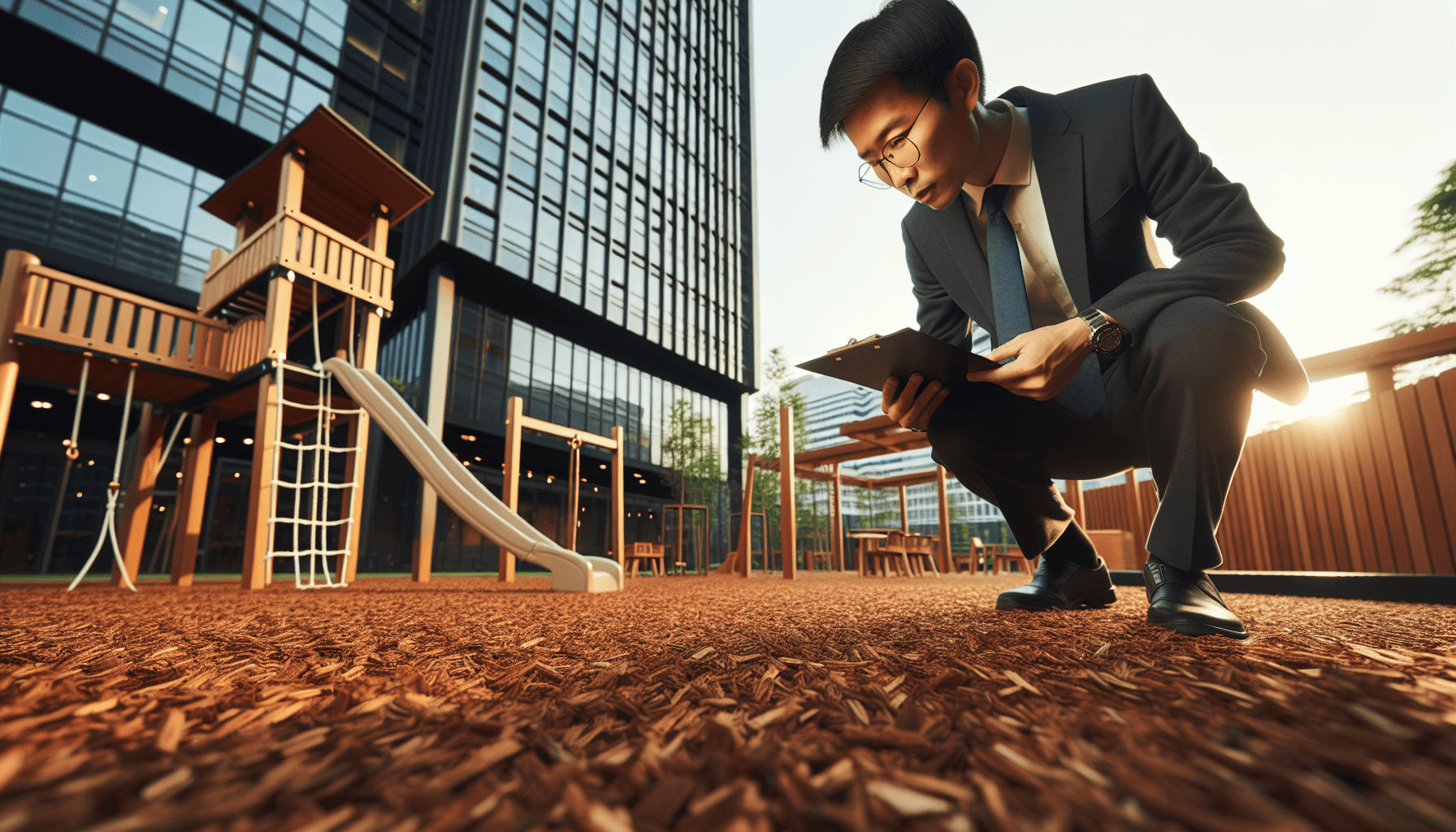
Why Safety Surfacing is a Financial Decision, Not Just a Safety One
When procurement directors evaluate playground surfacing options, the immediate cost comparison seems straightforward: premium rubber mulch costs more upfront than basic materials. But for CFOs and operations managers looking at total cost of ownership, that calculation misses the bigger financial picture.
A single playground injury claim can cost between \0,000 and \00,000 in legal fees, settlements, and reputation damage—far exceeding the difference between basic and premium surfacing materials. The question isn't whether you can afford premium safety surfacing. It's whether you can afford not to invest in it.
The Hidden Cost of Playground Injuries
Playground injuries create cascading financial impacts that extend far beyond immediate medical bills:
Legal liability exposure: Even with general liability insurance, injury claims trigger deductibles (typically ,000-\5,000 per incident), legal defense costs, and potential premium increases. Organizations with multiple locations face compounding risk—one serious injury claim can increase insurance costs across your entire portfolio.
Operational disruption: When a playground is closed for investigation or remediation after an injury, your facility loses programming revenue, camps get canceled, and families choose competitors. The average playground closure costs parks departments ,000-\5,000 in lost revenue and staff reallocation.
Reputation and trust: In today's social media environment, a serious playground injury becomes public within hours. Schools and park districts report enrollment and funding impacts lasting 2-3 years after publicized safety incidents.
How Premium Surfacing Reduces Insurance Costs
Commercial insurance underwriters evaluate playground safety using specific risk factors—and surface material is one of the most heavily weighted variables. Here's how premium surfacing impacts your insurance profile:
Lower loss ratios: Insurers track claims history by surface type. Facilities using ASTM F1292-compliant rubber mulch show 40-60% fewer fall-related injury claims compared to basic materials, according to industry actuarial data.
Reduced liability premiums: Many commercial insurers offer 10-15% premium discounts for playgrounds with certified impact-attenuating surfaces. For a mid-sized park system with \00,000 in annual playground liability premiums, that's \0,000-\0,000 in annual savings.
Claims defense advantage: When injuries do occur, documented compliance with ASTM standards and critical fall height requirements provides legal protection that dramatically reduces settlement costs. Plaintiff attorneys are far less likely to pursue expensive litigation when safety compliance is documented and verified.
Total Cost of Ownership: A 10-Year Comparison
Let's examine the true financial impact over a playground's typical 10-year lifecycle:
Premium rubber mulch surfacing (1,500 sq ft playground):
- Initial installation: \2,000
- Annual maintenance/replenishment: \00
- 10-year maintenance total: ,000
- 10-year total cost: \0,000
Basic wood mulch surfacing (1,500 sq ft playground):
- Initial installation: ,500
- Annual maintenance/replenishment: ,800 (higher decomposition rate)
- 10-year maintenance total: \8,000
- Expected injury claims (1 moderate claim): \5,000
- Increased insurance premiums over 10 years: \5,000
- 10-year total cost: \22,500
The premium material saves \02,500 over 10 years—a 500% ROI on the initial investment difference.
Risk Management as Strategic Investment
Forward-thinking CFOs view premium playground surfacing as risk mitigation infrastructure—equivalent to fire suppression systems or security cameras. The calculation is straightforward:
Risk exposure reduction: Premium surfacing reduces your organization's potential liability exposure by 60-80% compared to basic materials. For multi-site operators, this compounds across your entire portfolio.
Predictable budgeting: Premium materials have longer lifecycles and lower maintenance volatility. You replace rubber mulch every 8-10 years on a planned schedule, versus emergency remediation when basic materials fail inspection.
Audit and compliance: When state inspectors, insurance auditors, or legal teams review your facilities, ASTM-compliant surfacing with documented critical fall height testing is a checkbox item—not a negotiation.
What Procurement Should Request
When evaluating surfacing bids, request these specific items to ensure you're comparing true costs:
- Critical fall height certification: Demand independent lab testing showing compliance with ASTM F1292 for your equipment's maximum fall heights
- 10-year lifecycle cost analysis: Request detailed maintenance schedules and replacement timelines, not just installation costs
- Insurance compatibility documentation: Verify materials meet your insurer's requirements and ask for written confirmation of any available premium discounts
- Warranty terms: Premium materials should include 8-10 year warranties on safety performance, not just material degradation
Making the Case to Leadership
When presenting the premium surfacing investment to your board or executive team, frame it in risk-adjusted terms:
"We can install basic surfacing for ,500 and accept 10-year risk exposure of \00,000+ in potential claims, or invest \2,000 in premium surfacing and reduce that risk exposure to \0,000-\0,000. The ,500 additional investment protects against \0,000+ in liability risk."
The decision becomes obvious when framed as risk management rather than facilities maintenance.
The Bottom Line
Premium playground safety surfacing isn't a luxury—it's a calculated financial hedge against liability risk. Organizations that view it as an insurance premium rather than a facilities expense see the ROI clearly: lower claims frequency, reduced insurance costs, predictable maintenance budgets, and most importantly, protected reputation.
When your crew installs that first load of premium rubber mulch, you're not just building a safer playground. You're building a stronger balance sheet.
Ready to evaluate premium safety surfacing for your facilities? Visit GetMulch.com to request a site assessment and lifecycle cost analysis.